CogniFit Pricing 2026: Plans, Features, Free Trial & Is It Worth the Cost?
CogniFit Pricing 2026: Plans, Features, Free Trial & Is It Worth the Cost?
CogniFit pricing depends on the plan, platform, country, and current promotion. For U.S. web users, CogniFit currently lists individual Basic at $19.99 per month or $119.99 per year, while Premium is $29.99 per month, $169.99 per year, or $249.99 for three years. CogniFit also provides limited free access so new users can try an initial cognitive assessment and some games before subscribing. Mobile-app pricing can differ from web pricing, so buyers should check the price shown at checkout before purchasing.
Quick buying advice: If you want access to one training program at a lower cost, Basic may be enough. If you want access to CogniFit's broader library of training programs and more games, Premium is the more comprehensive option.
If you are searching for CogniFit pricing, you are probably past the basic “What is CogniFit?” stage.
You are trying to answer a more practical question:
What will I actually pay, what do I get for that money, and is CogniFit worth adding to my digital wellness routine?
That is exactly what this guide is designed to answer.
CogniFit has evolved beyond a collection of casual brain games. The platform combines cognitive assessments, personalized training, progress tracking and different training programs designed around cognitive skills such as memory, attention, reasoning, coordination and perception.
But there is a big difference between finding a brain-training platform interesting and deciding whether it deserves your money.
So, rather than simply telling you that CogniFit is “good,” this guide looks at its pricing, subscription options, features, free access, value for money and which type of user is most likely to benefit from paying for it.
Disclosure: This article is intended for educational and purchasing research purposes. Prices, promotions and subscription options can change. Always confirm the final price and terms shown by CogniFit before completing a purchase.
Thinking About Trying CogniFit?
If you're already considering CogniFit, it's worth checking the current plans and pricing before making a decision. You can see what's included, compare your options, and decide whether Basic or Premium makes more sense for the way you plan to use it.
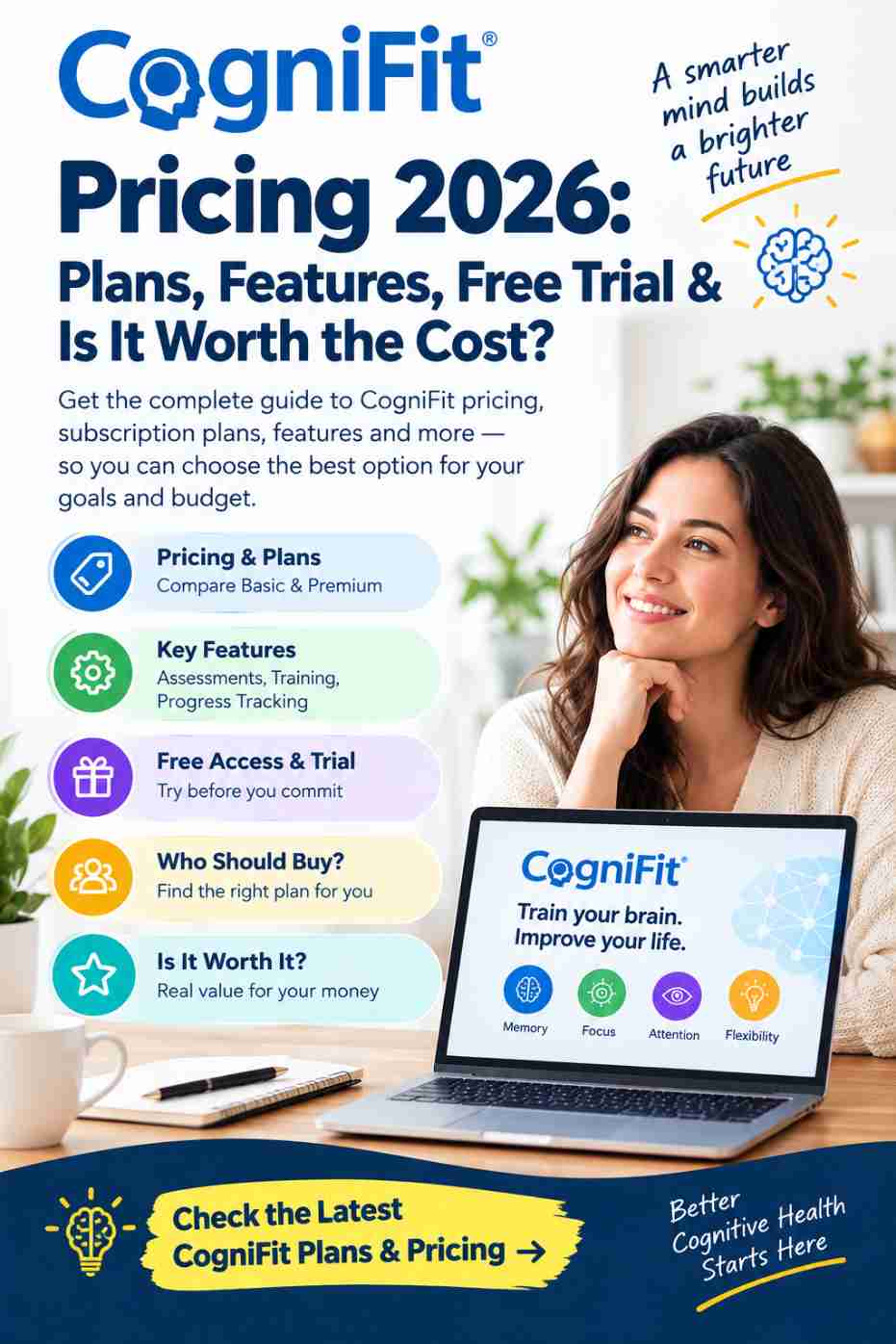
CogniFit Pricing at a Glance
CogniFit currently offers different subscription structures depending on whether you use the website, mobile app, family platform or professional platform.
For individual users purchasing through the website, CogniFit's current Help Center lists these U.S. prices:
| Plan | Monthly | Annual | 3-Year |
|---|---|---|---|
| Basic | $19.99/month | $119.99/year | — |
| Premium | $29.99/month | $169.99/year | $249.99 |
These are the web prices listed by CogniFit for the United States. The company states that prices may vary depending on the user's country and currency.
That distinction matters if you are purchasing from outside the U.S.
Do not assume the U.S. price is automatically the price you will see at checkout.
Limited-Time CogniFit Offer: 50% Off Through September 24
If you're considering CogniFit, there is currently a limited-time opportunity to save 50% on everything. From September 17 through September 24, 2026, your audience can get 50% off CogniFit, making this a particularly timely opportunity to compare the plans and decide whether a subscription fits your goals and budget.
See the Current 50% Off CogniFit Offer →
This promotion ends September 24, 2026, so check the current offer before subscribing.
What Does CogniFit Basic Include?
CogniFit Basic is designed for people who want structured cognitive training without paying for access to the entire training library.
According to CogniFit's current subscription documentation, Basic includes:
- A training program of your choice
- More than 20 games
- Access to cognitive assessments
- Cognitive profile and ranking
- Evaluation during training sessions
- Progress and performance information
- Customer support
The important distinction is that Basic focuses on one selected training program, rather than giving you the complete training catalogue.
Who should consider Basic?
Basic makes the most sense if you already know what you want to work on.
For example, you may primarily want:
- Memory training
- Concentration exercises
- Attention training
- A specific cognitive training program
- Regular cognitive assessments
If you are not interested in experimenting with multiple training programs, paying extra for a broader subscription may not provide enough additional value.
What Does CogniFit Premium Include?
Premium is the more comprehensive individual subscription.
CogniFit says Premium provides access to all training programs available on the platform, more than 60 games, cognitive assessments, your cognitive profile and ranking, and evaluation during sessions.
In practical terms, Premium is aimed at people who want to explore multiple areas rather than commit to a single training program.
Premium may make more sense if you want:
- Multiple cognitive training programs
- A broader selection of brain-training games
- More flexibility in your training routine
- Ongoing cognitive assessments
- Progress monitoring
- A more complete CogniFit experience
The additional flexibility is the main reason I would consider Premium over Basic.
Is There a Free CogniFit Trial?
This question needs a little clarification because “free access” and “free trial” are not always the same thing.
CogniFit's individual-user documentation says that after creating an account, users can access some free functionality, including an initial cognitive assessment and opportunities to try cognitive games. A paid subscription is required for more complete access to the platform.
CogniFit also promotes free-trial offers in some parts of its ecosystem. For example, its current Brain Training/Quiz experience advertises a 7-day free trial with monthly and annual plans.
Therefore, the safest approach is:
Check the exact trial or introductory offer presented during your signup and checkout.
Trial availability, duration and pricing can differ between products, platforms and promotions.
CogniFit Web vs Mobile Pricing: Why It Matters
This is one of the easiest things to overlook.
CogniFit explicitly states that website subscription plans and mobile-app subscription plans are different.
The current Indian App Store listing, for example, displays several CogniFit in-app purchase options in Indian rupees, demonstrating that mobile pricing can differ from the web subscription structure.
That means you should not automatically assume:
“The price I saw on the website will be the same price in the app.”
It may not be.
My recommendation
Before purchasing:
- Compare the web subscription.
- Check the mobile-app subscription if you primarily train on your phone.
- Look at the billing period.
- Check whether the offer is promotional.
- Confirm the renewal terms.
- Check the final currency and taxes shown at checkout.
This takes a few minutes and can prevent an unnecessary pricing surprise.
What Do You Get With a CogniFit Subscription?
A paid CogniFit subscription is not simply a collection of additional games.
The platform combines several components:
1. Cognitive Assessments
CogniFit provides cognitive assessments intended to help users understand different aspects of cognitive performance.
The company says subscribers have access to its cognitive assessments, with the same assessment available again after 30 days when the subscription is active.
2. Personalized Training
Rather than following exactly the same routine forever, CogniFit's training system is designed around individual performance.
This is an important distinction for buyers who want more structure than ordinary puzzle apps provide.
3. Brain-Training Games
The subscription provides access to a larger selection of cognitive games and tasks.
Basic provides more than 20 games, while Premium provides access to more than 60 according to CogniFit's current individual subscription documentation.
4. Cognitive Profile
Users can monitor their cognitive profile and ranking as they use the platform.
For people who enjoy measurable progress, this can be more motivating than simply playing an occasional brain game.
5. Progress Tracking
Tracking gives you a reason to return.
Instead of asking yourself whether your training is making any difference, you can use the platform's scores and progress information to observe changes over time.
Is CogniFit Worth the Cost?
For the right user, I believe CogniFit can be worth paying for—but it depends heavily on whether you will actually use it consistently.
That last point is more important than the price.
A $120 annual subscription that you use several times every week can potentially provide more practical value than a cheaper application that you abandon after two weeks.
The value proposition becomes stronger if you want:
- Structured cognitive training
- Personalized exercises
- Cognitive assessments
- Progress tracking
- A broader training routine
- Regular mental-performance activities
It becomes weaker if you only want occasional puzzles for entertainment.
The simple test
Ask yourself:
Would I realistically use CogniFit several times each week for the next few months?
If the answer is yes, a subscription is easier to justify.
If the answer is no, start with the available free functionality before committing to a longer subscription.
Still deciding whether CogniFit deserves a place in your routine? Our hands-on CogniFit Review 2026 takes a closer look at its training approach, cognitive assessments, personalization and everyday usability before you commit to a subscription.
CogniFit Basic vs Premium: Which Plan Should You Choose?
Here's the simplest way to look at it.
Choose Basic if:
- You want one main training program.
- You want to keep the subscription cost lower.
- You mainly care about a specific cognitive skill.
- You do not need the complete training catalogue.
Choose Premium if:
- You want access to all available training programs.
- You want more games and training variety.
- You want maximum flexibility.
- You expect to use CogniFit consistently.
- You want the broader individual CogniFit experience.
My pick for most committed users
Premium is the better choice for users who already know they will use CogniFit regularly.
The reason is simple: you are not paying only for more games. You are paying for broader access to the platform's training ecosystem.
But if your needs are narrow, Basic can be the more financially disciplined decision.
Is the Annual CogniFit Plan Better Than Monthly?
In most subscription businesses, annual billing becomes attractive when you know you are going to use the product for the long term.
CogniFit's current U.S. web pricing makes that difference clear.
For Basic:
- Monthly: $19.99
- Annual: $119.99
For Premium:
- Monthly: $29.99
- Annual: $169.99
At those listed prices, paying month-to-month for a full year would cost considerably more than the annual price.
But don't buy annually just because it looks cheaper.
The better rule is:
Use free access or a trial where available, decide whether you will actually use CogniFit consistently, and then consider annual billing if the platform fits your routine.
That approach is better than purchasing a long subscription simply because the headline saving looks attractive.
What About CogniFit for Families?
CogniFit also offers family-oriented options.
Its current pricing page identifies family plans and states that additional family members can receive a substantial discount.
If more than one person in your household intends to use cognitive training, compare the family option before purchasing multiple individual subscriptions.
For a single user, however, an individual plan is generally the simpler place to start.
What About CogniFit for Healthcare Professionals?
This is a different purchasing category.
CogniFit provides professional solutions for healthcare professionals, researchers, educators and organizations.
Its professional Premium offering can include features such as:
- Patient progress tracking
- Downloadable reports
- Cognitive evaluation tools
- Training tools
- Customizable training plans
- White-label reporting
- Account management tools
- Professional licenses
CogniFit's professional documentation also currently describes a 14-day free trial for its Premium professional subscription.
If you are a clinician, psychologist, rehabilitation professional, researcher or organization, do not compare the consumer Basic/Premium subscription with the professional platform as though they are the same product.
They serve different use cases.
If you're evaluating CogniFit for a clinic, rehabilitation center, school or healthcare organization rather than personal use, our guide to CogniFit Professional explains the professional features, reporting tools and multi-user capabilities in more detail.
What Makes CogniFit Different From Ordinary Brain Games?
This is where CogniFit becomes more interesting.
A casual puzzle app generally gives you a puzzle.
CogniFit attempts to build a more structured system around:
assessment → training → performance → progress
That distinction matters if you want your brain-training activity to become a routine rather than something you open when you are bored.
The platform also organizes training around multiple cognitive areas rather than treating “brain health” as one single skill.
However, that does not mean CogniFit should be viewed as a replacement for medical assessment or treatment.
CogniFit itself states that its cognitive assessments are intended as an aid to assessing cognitive wellbeing and that its brain training is designed to promote general cognitive health. It does not provide medical diagnosis or treatment of disease.
If you're still deciding whether structured cognitive training belongs in your wellness routine, our guide to enhancing cognitive health looks at practical ways to support memory, focus and overall cognitive wellbeing beyond a single app.
Does CogniFit Guarantee Better Memory or Focus?
No responsible buyer should purchase a cognitive-training product because they expect guaranteed medical or cognitive outcomes.
CogniFit provides assessments and training designed around cognitive skills, but individual results can vary.
Your results can depend on:
- How consistently you train
- Your starting ability
- Sleep
- Stress
- Age
- Lifestyle
- Health
- Motivation
- How often you use the platform
There is also an important distinction between becoming better at a particular cognitive task and seeing meaningful improvements in everyday life.
That is why I would treat CogniFit as a structured cognitive-training and monitoring tool, not a guaranteed solution for every memory or concentration problem.
If you are experiencing significant or sudden cognitive changes, speak with an appropriate healthcare professional rather than relying on a brain-training application.
CogniFit Pricing: Is Premium Really Worth Paying More?
This comes down to usage.
If you only want one specific training program, Basic can make more financial sense.
If you want to explore multiple cognitive domains and use a broader selection of training programs, Premium has the stronger value proposition.
The wrong way to decide is:
“Premium has more features, so Premium must be better.”
The better question is:
“Will I actually use those additional features?”
If yes, Premium may be worth the extra cost.
If not, Basic could be enough.
Who Should Consider Paying for CogniFit?
CogniFit is particularly worth considering for people who:
- Want a structured brain-training routine
- Enjoy measurable progress
- Want cognitive assessments alongside training
- Are interested in memory and attention exercises
- Prefer personalized digital wellness tools
- Want to build a consistent cognitive fitness habit
- Want access to a broader training library
It may also appeal to professionals looking for a separate cognitive assessment and training platform, although professional users should investigate CogniFit's dedicated professional products rather than purchasing a consumer subscription.
If you're building a broader wellness routine rather than focusing on brain training alone, see how CogniFit fits into our Modern Mother Wellness Stack, which brings cognitive wellness together with sleep, recovery, hormonal awareness and other practical health tools.
Who Probably Doesn't Need a Paid CogniFit Plan?
You probably don't need a subscription if:
- You only want occasional puzzles.
- You are unlikely to train regularly.
- You are expecting a guaranteed medical result.
- You are only interested in one or two free games.
- You have no interest in tracking cognitive progress.
- You are looking for medical diagnosis or treatment.
This is an important distinction.
Not every visitor needs to become a customer.
A trustworthy buying guide should tell readers when a product may not be worth purchasing.
That honesty can ultimately make the recommendations more persuasive.
How to Get the Best Value From CogniFit
If you decide to subscribe, don't simply pay and forget about it.
Use it strategically.
Step 1: Start with the assessment
Establish a baseline before judging your progress.
Step 2: Identify your priorities
Decide whether your primary interest is memory, attention, concentration, reasoning or another cognitive area.
Step 3: Build a realistic schedule
A short, consistent routine is more practical than promising yourself an unrealistic daily commitment.
Step 4: Track your progress
Look for patterns rather than obsessing over one score.
Step 5: Reassess your subscription
After using the platform for a reasonable period, ask:
Am I actually using the features I'm paying for?
If you are not, a more limited plan may be enough.
CogniFit Pricing 2026: My Verdict
CogniFit is not the cheapest way to play brain games, but price alone is the wrong comparison.
Its value comes from combining cognitive assessment, structured training, personalized exercises and progress tracking in one ecosystem.
For someone who wants a serious, repeatable cognitive-training routine, CogniFit Premium offers the strongest overall feature set.
For someone who wants to focus on a specific training program and keep spending under control, Basic is the more sensible option.
And if you are still unsure, don't rush into an annual subscription.
Start with the available free access or current trial offer, explore the platform, and then decide whether you are likely to use it consistently.
Ready to see the current CogniFit offer?
Check the current CogniFit plans and pricing before purchasing, because available prices and promotions can change by country, platform and offer.
Frequently Asked Questions About CogniFit Pricing
How much does CogniFit cost in 2026?
For individual users purchasing through the CogniFit website in the United States, the current Help Center lists Basic at $19.99 per month or $119.99 annually. Premium is listed at $29.99 per month, $169.99 annually or $249.99 for three years. Prices may vary by country.
Is CogniFit free?
CogniFit provides limited free functionality for individual users, including an initial cognitive assessment and opportunities to try some games. Full access to the broader training platform requires a subscription.
Does CogniFit have a free trial?
CogniFit offers free-trial promotions for some products and subscription experiences. Its current Brain Training/Quiz offering advertises a seven-day free trial, while the exact offer available to you can depend on the product and signup path.
Is CogniFit Premium worth it?
Premium is most likely to be worthwhile if you want access to multiple training programs and a broader selection of games. If you only need one training program, Basic may provide better value.
Is CogniFit Basic worth it?
Basic can make sense for users who want a specific training program, cognitive assessments and a more limited selection of games without paying for the complete Premium library.
Is CogniFit better monthly or annually?
If you are confident that you will use CogniFit throughout the year, annual billing can offer better value based on the current listed U.S. web prices. If you are uncertain, starting monthly or using available free access/trial options can reduce commitment.
Can I cancel CogniFit?
CogniFit's current individual subscription documentation states that users can change or cancel their subscription. Always check the applicable cancellation instructions for the platform through which you purchased.
Does CogniFit work on mobile devices?
Yes. CogniFit offers mobile applications, and its current documentation says the app is available for iOS and Android devices. Mobile subscription pricing can differ from web pricing.
Is CogniFit a medical treatment?
No. CogniFit states that its cognitive assessments are intended as an aid for assessing cognitive wellbeing and that its brain training is designed to support general cognitive health. It does not provide medical diagnosis or treatment of disease.
Is CogniFit worth the money?
It can be, particularly if you want structured cognitive training, assessments and progress tracking and expect to use the platform consistently. If you only want occasional brain games, paying for a subscription may not provide enough additional value.
Which CogniFit plan is best?
For focused training, Basic may be sufficient. For users who want the broadest access to individual training programs and games, Premium is the stronger option.
Where can I check the latest CogniFit price?
The safest option is to check CogniFit's current pricing page or the price displayed in the relevant app store before purchasing, because prices and promotions can change by country and platform.
Ready to See If CogniFit Is Right for You?
If the features and pricing make sense for your goals, the next step is simple: take a look at the latest CogniFit offer and see which plan fits your needs and budget.You don't have to overthink it. Check the available options, review what each plan includes, and choose the subscription that makes sense for you.
Final Takeaway
The smartest way to look at CogniFit pricing in 2026 is not simply to ask, “What is the cheapest plan?”
Ask:
“Which plan gives me the features I will actually use?”
Basic is the sensible choice for focused training.
Premium is better for broader access and regular users.
Free access or a current trial is the best starting point if you are still evaluating the platform.
And if you decide that structured cognitive training fits your routine, checking the current offer before committing is the next logical step.
Your brain deserves attention—but your subscription budget does too.
#CogniFit #CogniFitPricing #CogniFit2026 #BrainTraining #CognitiveTraining #CognitiveHealth #BrainFitness #MemoryTraining #FocusTraining #CognitiveAssessment #MentalPerformance #BrainHealth #DigitalWellness #WellnessTechnology #HealthTech #BrainTrainingApps #CognitiveFitness #PersonalizedTraining #ProductivityTools #WellnessTools
Disclaimer:
This content is for informational purposes only and does not constitute medical advice. Always consult a qualified healthcare professional before making decisions.This article was created with AI-assisted research and carefully reviewed by our in-house team before publication.
This article may contain affiliate links. If you choose to purchase through these links, we may earn a commission at no additional cost to you.