Why Most Fertility Apps Can Be Inaccurate (And What Actually Works Today)
This article was generated with the assistance of AI tools and carefully reviewed by our in-house team before publication.
The uncomfortable truth about fertility tracking
Fertility tracking has long been built around a simple routine—wake up, take your temperature, log it, and rely on the result. While this method provides some insight, it doesn’t always capture the full picture.
Most fertility apps depend on a single daily temperature reading, which can limit overall fertility tracking accuracy. Human biology operates continuously, not in isolated snapshots.
If your data is incomplete, your ovulation prediction accuracy may be affected. That’s where many users begin to notice inconsistencies.
Still relying on a single daily reading?
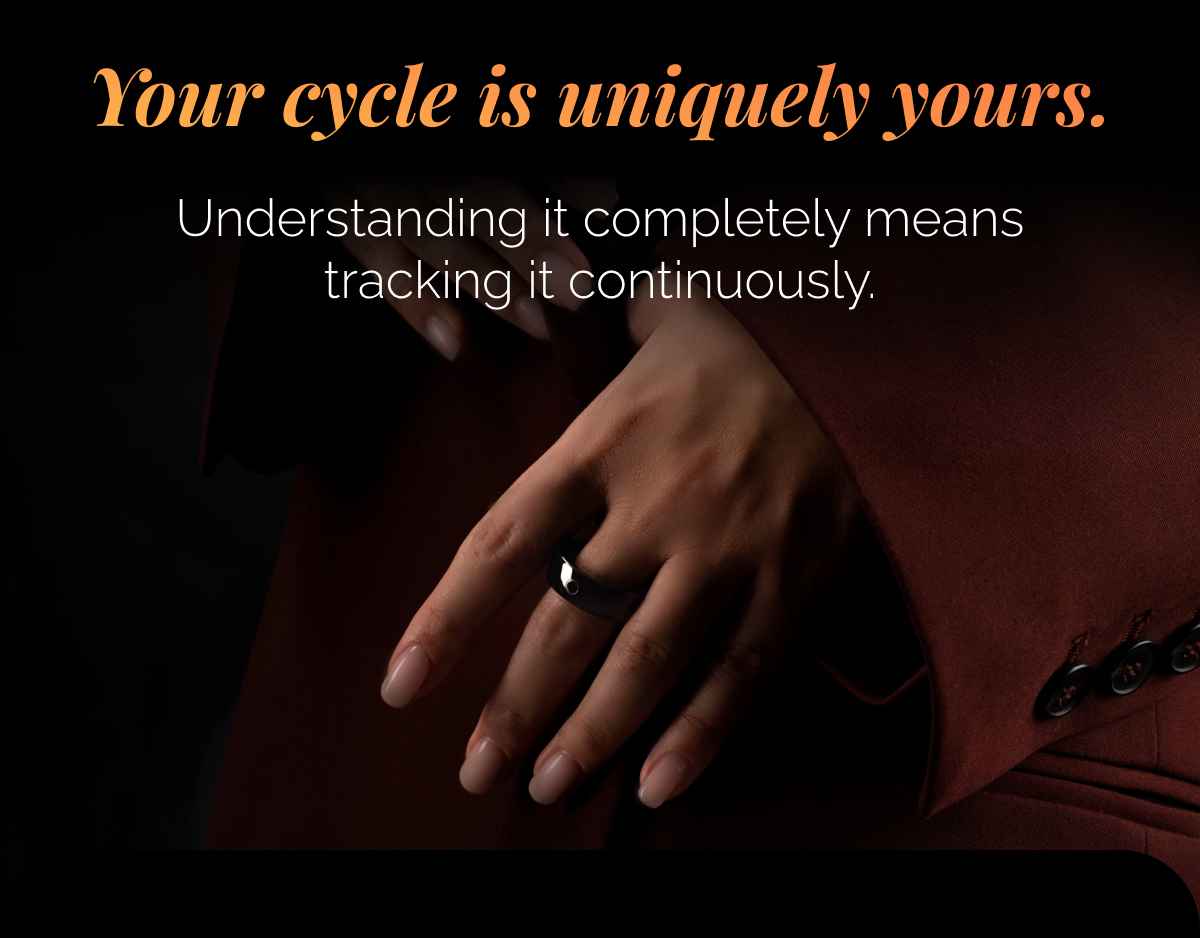
That means you’re working with incomplete data. Upgrade to continuous tracking with the Circular Ring 2 and start understanding your cycle with deeper, more consistent insights—without the manual effort.
Use code KURUNTHA to get 10% OFF
Why once-a-day temperature tracking has limits
Basal body temperature tracking is a widely accepted method, but it comes with practical challenges:
- Requires strict consistency in timing
- Influenced by sleep quality, stress, illness, and environment
- Typically confirms ovulation after it has already occurred
This means it works more as a confirmation method rather than an early prediction tool.
What your body actually does at night
Your body temperature fluctuates throughout the night based on internal rhythms and hormonal activity.
- Early night: Temperature drops during deep sleep
- Mid-night: Temperature stabilizes, offering clearer signals
- Late night: Temperature rises as your body prepares to wake
These natural variations play a key role in fertility signals. A single morning reading may not fully reflect these patterns.
The data gap in traditional fertility apps
Understanding why fertility apps can be inaccurate starts with their data model.
Most rely on:
- Manual input
- Limited data points
- Generalized algorithms
This can result in:
- Partial insights
- Delayed interpretation
- Variability in ovulation prediction accuracy
These tools can still be useful—but they have limitations.
Fertility tracking tools are designed to support awareness, not replace medical evaluation.
What actually works: continuous temperature tracking
A more advanced approach is continuous temperature tracking fertility—capturing data throughout the night instead of a single moment.
Devices like the Circular Ring 2 represent this shift toward smarter tracking.
They function as a wearable fertility tracker by:
- Monitoring temperature continuously during sleep
- Capturing trends instead of isolated readings
- Combining data with HRV and personal baselines
- Using AI to interpret patterns over time
This creates a more complete and consistent understanding of your cycle.
Why continuous data can improve insights
Continuous ovulation tracking devices offer a broader dataset, which can enhance accuracy over time.
By integrating:
- Temperature patterns
- Fertility tracking with HRV
- Individual baseline data
Users may benefit from:
- Earlier identification of fertile windows
- Reduced manual effort
- More consistent tracking insights
This is especially valuable for those seeking improved ovulation prediction accuracy.
Smart ring vs fertility apps: a practical comparison
| Factor | Traditional Apps | Continuous Tracking Devices |
|---|---|---|
| Data Collection | Manual | Automatic |
| Frequency | Once daily | Continuous |
| Effort | High | Minimal |
| Insight Depth | Limited | More comprehensive |
| Prediction Timing | Often after ovulation | May provide earlier signals |
Is continuous tracking necessary?
Not necessarily.
For individuals with regular cycles, traditional methods may still provide useful insights.
However, continuous tracking may be beneficial if you:
- Want higher fertility tracking accuracy
- Prefer a passive fertility tracking wearable
- Have irregular cycles
- Value data-driven health insights
It’s about choosing the level of precision that suits your needs.
Important considerations
No method guarantees perfect results.
- These tools are not medical devices
- They do not guarantee conception outcomes
- Results vary from person to person
For medical guidance, consulting a qualified professional is always recommended.
More women are beginning to understand that hormonal health cannot be separated from sleep quality, recovery patterns, stress levels, and overall lifestyle wellness habits.
Final perspective: better data leads to better decisions
Fertility tracking is evolving. While traditional methods like basal body temperature tracking offer value, they rely on limited data.
Continuous monitoring provides a more detailed view of your body’s patterns, helping reduce uncertainty over time.
If you’re looking to improve how you track your cycle, exploring advanced solutions like the Circular Ring 2 can be a practical next step.
🎯 Exclusive Offer for Our Readers
Take a smarter step toward accurate tracking today.
Use code KURUNTHA to get 10% OFF on your purchase and start tracking with better insights and less guesswork.
If you want more clarity and less guesswork in your fertility tracking, it’s time to switch to a smarter approach.
The Circular Ring 2 offers continuous insights designed to support better decisions.
Use code KURUNTHA to get 10% OFF—take the next step toward more informed tracking today.
#FertilityTracking #OvulationTracking #WomensHealth #SmartHealth #AIHealth #FertilityAwareness #CycleTracking #HealthOptimization #WearableTech #DigitalHealth #OvulationAccuracy #ConceptionSupport #PrecisionHealth #HealthUpgrade #BioDataTracking
This content is for informational purposes only and is not intended as medical advice. The Circular Ring 2 is not a medical device and does not guarantee pregnancy outcomes. Please consult a qualified healthcare professional for personalized guidance.
This article may contain affiliate links. We may earn a commission at no additional cost to you.