Herbal Academy Clinical Herbalist Path: Is This the Fastest Route to Professional Herbalism in 2026?
Herbal Academy Clinical Herbalist Path: Is This the Fastest Route to Professional Herbalism in 2026?
The Problem Most Aspiring Herbalists Face
The Herbal Academy Clinical Herbalist Path is a structured educational pathway designed for learners who want to progress from foundational herbal knowledge toward advanced clinical herbalism. In 2026, it remains one of the most comprehensive online herbal training options, offering a guided curriculum, flexible learning environment, and a clear progression model for aspiring herbal practitioners.
Many people discover herbalism through books, YouTube channels, workshops, or social media creators. The initial learning phase is often exciting. Information is abundant, communities are welcoming, and the subject itself feels deeply rewarding.
The challenge appears several months later.
Knowledge becomes fragmented.
One course covers plant identification. Another focuses on herbal preparations. A third discusses client consultations. Resources accumulate, but a structured progression often remains missing.
This creates a common bottleneck.
Learners know more than beginners but still struggle to understand what comes next.
For anyone considering a serious path toward professional herbalism, the real question is no longer "Which course should I take?" but rather "Which learning pathway can provide long-term educational direction?"
That is where the Herbal Academy Clinical Herbalist Path enters the conversation.
If you're serious about building herbal knowledge beyond scattered YouTube videos, social media tips, and random courses, it may be worth exploring the Clinical Herbalist Path curriculum to see how Herbal Academy structures the journey from foundational learning to advanced herbal practice.
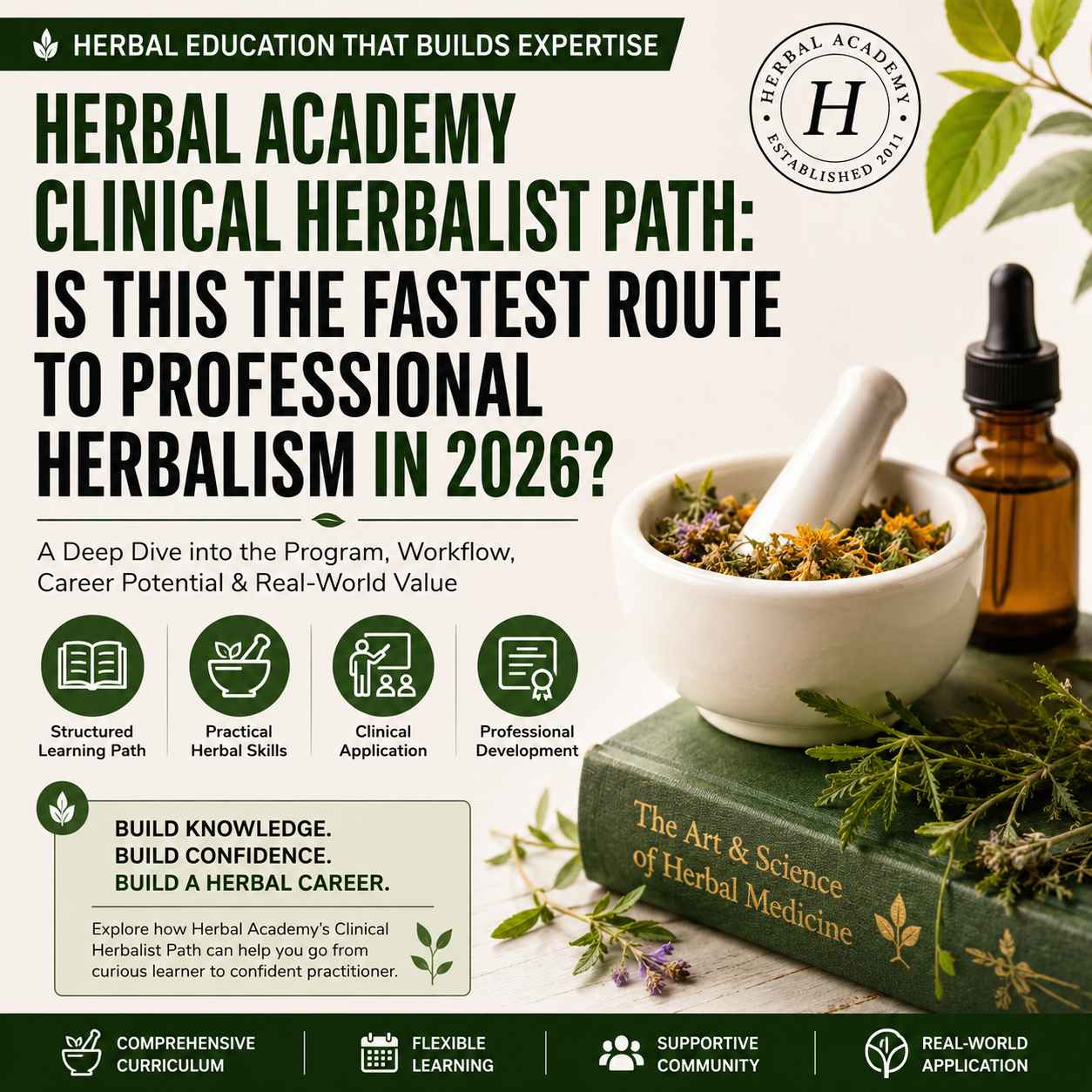
Understanding the Clinical Herbalist Path
Unlike standalone herbal courses that focus on individual topics, the Clinical Herbalist Path is designed as a sequential educational framework.
Rather than purchasing disconnected classes, learners follow a structured route that gradually expands their knowledge and practical understanding.
The concept itself is simple.
Build a foundation first.
Develop practical skills second.
Move toward clinical thinking and professional application afterward.
This progression mirrors how many traditional professions approach education. Instead of consuming random information, students move through increasingly advanced material with a clear objective.
From an operational standpoint, this structure is one of the strongest aspects of the program.
Why Structured Learning Often Beats Self-Directed Study
As someone who frequently evaluates digital education platforms and online learning workflows, one pattern appears repeatedly.
Most people overestimate their ability to build a curriculum for themselves.
Self-directed learning sounds efficient.In reality, it often leads to:
- Information overload
- Learning gaps
- Repeated content consumption
- Poor knowledge retention
- Lack of progression tracking
The Clinical Herbalist Path addresses these issues by creating a predefined roadmap.
This may sound restrictive to experienced herbalists, but for learners seeking professional development, predefined pathways often improve consistency and completion rates.
The system removes one major source of friction:
Deciding what to learn next.
Many aspiring herbalists delay formal training because they assume professional herbal education is unaffordable, but flexible learning pathways and payment options have made structured herbal education far more accessible than many people realize.
Onboarding Experience and Learning Workflow
One aspect frequently overlooked in educational reviews is workflow design.
A course may contain excellent information while still creating a frustrating learning experience.
Fortunately, Herbal Academy appears to understand modern online education reasonably well.
The learning workflow generally follows a logical progression:
- Enrollment
- Course navigation
- Module completion
- Resource downloads
- Practical exercises
- Continued advancement
The interface is approachable even for non-technical users.
This matters more than many people realize.
Educational momentum is fragile.
When learners encounter confusing navigation or disorganized content, engagement declines rapidly.
The Clinical Herbalist Path avoids many of those common obstacles.
Productivity Impact for Serious Learners
One of the most interesting aspects of the program is not the content itself.
It is the reduction of decision fatigue.
In productivity systems, reducing unnecessary decisions often improves long-term consistency.
The same principle applies to education.
Instead of asking:
"What should I study next?"
Students can focus on:
"What should I understand better?"
That distinction seems small but has significant implications for learning outcomes.
Structured progression often increases completion rates because mental energy remains focused on learning rather than planning.
Practical Applications Beyond Hobby Herbalism
Many herbal education programs primarily serve hobbyists.
There is nothing wrong with that.
However, learners considering client-facing work often require deeper educational frameworks.
The Clinical Herbalist Path appears better suited for individuals who want to move beyond casual interest.
Potential applications include:
- Wellness coaching support
- Herbal consultation preparation
- Community education
- Small herbal product businesses
- Continuing education pathways
- Holistic health entrepreneurship
While educational completion does not automatically create professional competency, structured training provides a stronger foundation than piecing together knowledge from scattered sources.
Where the Program Still Has Limitations
No educational platform is perfect.
The strongest reviews acknowledge both strengths and weaknesses.
Several limitations deserve consideration.
Cost Considerations
Comprehensive education rarely comes cheaply.
While bundled pathways often provide better long-term value than purchasing multiple individual courses, the upfront investment may still feel substantial for some learners.
Self-Motivation Is Still Required
A structured path is not the same as accountability.
Online education remains dependent on personal discipline.
Students expecting a classroom-style environment may struggle with self-paced learning.
Clinical Experience Cannot Be Fully Replicated Online
This is perhaps the most important limitation.
Digital education can provide knowledge.
Real-world practice develops judgment.
No online program can completely replace direct observation, mentorship, or practical experience.
The Clinical Herbalist Path reduces educational gaps but does not eliminate the need for continued experiential learning.
Comparing the Clinical Herbalist Path to Alternative Learning Models
Compared to Free Online Resources
Free resources offer accessibility but often lack structure.
The Clinical Herbalist Path provides organization, progression, and curriculum design.
Compared to Books
Books remain invaluable.
However, they rarely provide guided implementation pathways.
Many learners accumulate herbal books faster than they develop practical expertise.
Compared to In-Person Programs
In-person programs offer direct interaction and mentorship.
Online pathways offer flexibility and accessibility.
The right choice depends largely on personal circumstances, budget, and learning preferences.
Compared to Individual Herbal Academy Courses
Standalone courses work well for targeted learning.
The Clinical Herbalist Path works better for individuals seeking a complete educational journey.
Learners comparing multiple online herbal schools often discover that curriculum structure, instructor quality, and long-term learning support matter far more than simply choosing the lowest-priced option.
Sustainability and Long-Term Learning Value
One reason this pathway stands out is its alignment with sustainable learning principles.
Sustainable education focuses on:
- Long-term retention
- Progressive skill building
- Reduced overwhelm
- Consistent engagement
These characteristics often produce better outcomes than rapid-consumption learning models.
In a world increasingly dominated by short-form content and fragmented information, structured educational ecosystems remain surprisingly valuable.
Who Should Consider the Clinical Herbalist Path?
This pathway is particularly suitable for:
- Aspiring professional herbalists
- Wellness practitioners seeking herbal education
- Health-focused entrepreneurs
- Serious lifelong learners
- Individuals seeking curriculum structure
The educational framework rewards consistency and long-term commitment.
For many students, interest in professional herbalism begins after attending herbal workshops, webinars, or conferences and realizing they need a more structured educational path to continue progressing.
Who Might Want an Alternative?
Not everyone needs a comprehensive pathway.
You may prefer alternatives if:
- You only want basic herbal knowledge
- You learn best through in-person instruction
- You require intensive mentorship
- You dislike self-paced education
- You want highly specialized herbal training immediately
For those audiences, smaller programs or localized education options may offer better value.
After evaluating the learning structure, workflow design, and long-term educational value, the bigger question is not whether Herbal Academy offers enough content—it is whether this learning path aligns with your personal goals. If you want to review the complete program details, included courses, and current enrollment options, you can explore the Clinical Herbalist Path directly and determine whether it fits your herbal education journey.
FAQ Section
What is the Herbal Academy Clinical Herbalist Path?
It is a structured educational pathway that guides learners through progressively advanced herbalism education, helping them build foundational knowledge before moving into more complex clinical concepts.
Is the Clinical Herbalist Path suitable for beginners?
Yes. The learning structure is designed to support progression from foundational concepts toward more advanced herbal studies.
Does the program provide a clinical herbalist certification?
The program offers educational credentials and completion recognition, but learners should review local regulations and professional requirements regarding clinical practice.
How long does it take to complete the Clinical Herbalist Path?
Completion time varies based on learning pace, study commitment, and individual schedules. Self-paced learners typically progress at different rates.
Is online herbal education effective?
Online education can be highly effective when supported by structured curriculum design, practical exercises, and consistent learner engagement.
How does the Clinical Herbalist Path compare with free herbal resources?
Free resources provide valuable information, but structured programs offer a more organized educational progression and reduce learning gaps.
Can I build a herbal business after completing the program?
The educational content may help develop herbal knowledge and confidence, but business success depends on additional factors including experience, market understanding, regulations, and entrepreneurship skills.
Is the investment justified in 2026?
For learners seeking long-term herbal education rather than isolated courses, the structured pathway can provide stronger educational continuity and better overall value.
Many aspiring herbalists spend years collecting information from books, videos, and scattered courses. A structured learning path can shorten that journey considerably. If you're evaluating professional herbal education in 2026, reviewing the Clinical Herbalist Path may help you decide whether its curriculum, teaching approach, and progression model match the kind of herbal practitioner you hope to become.
Final Verdict
The Herbal Academy Clinical Herbalist Path is not the fastest route to becoming a professional herbalist simply because no serious professional pathway should prioritize speed above competence.
However, it may be one of the most structured and practical online routes available in 2026 for individuals who want organized progression rather than fragmented learning.
Its greatest strength is not any single course.Its strength lies in the educational system.
The pathway reduces decision fatigue, creates learning continuity, and helps students move through herbal education with greater confidence and direction.
That said, prospective learners should enter with realistic expectations. Online education can accelerate knowledge acquisition, but expertise still requires practice, observation, and long-term experience.
For committed learners seeking a comprehensive herbal education framework, the Clinical Herbalist Path represents a thoughtful investment.
For casual hobbyists, it may be more education than necessary.
For aspiring practitioners willing to commit to the process, it is one of the more compelling herbal learning pathways currently available.
Disclosure:
This article may contain affiliate links. If you choose a service through our links, we may earn a commission at no extra cost to you.
This article was created with AI-assisted research and carefully reviewed by our in-house team before publication