Why Your Sleep Score Changes With the Seasons
Why Your Sleep Score Changes With the Seasons
Seasonal changes in daylight can influence the body's circadian rhythm, which helps regulate sleep and wakefulness. A lower sleep score may reflect changes in sleep duration, timing or other tracked signals, but it does not identify the cause on its own. Tracking patterns over several weeks, alongside your daily habits and how you feel, provides more useful context than judging a single night's score.
Have you noticed that your sleep feels different when the seasons change, even though your bedtime has barely moved?
You might wake up feeling less refreshed, notice changes in your sleep score or find that your energy fluctuates throughout the day. It is tempting to treat a lower number on your sleep tracker as a sign that something has gone wrong. But one night's score rarely tells the whole story.
Daylight influences the body's internal clock, which helps regulate when we feel alert and when we become ready for sleep. Changes in light exposure, daily routines, stress and sleep duration can all influence how well we rest. The relationship is complex, and the effects vary from person to person.
This is where wearable sleep tracking can provide useful context. Circular Ring combines sleep-related measurements with an app-based experience that includes Kira, its AI wellness assistant. Rather than looking at one number in isolation, users can examine patterns across multiple nights and consider how those patterns relate to their daily routines.
For anyone exploring sleep and recovery technology, the important question is not whether a wearable can eliminate seasonal sleep changes. It is whether the information helps you understand your own habits more clearly.
If you want a clearer picture of your sleep patterns and daily recovery, explore Circular Ring's tracking features and check whether the current 10% discount suits your needs.

Explore Circular Ring's sleep-tracking features and current offer.
Why Daylight Can Influence Your Sleep
The human body follows a circadian rhythm, an internal timing system that influences sleep, wakefulness and other biological processes. Light and darkness are important signals that help synchronise this rhythm with the surrounding environment.
According to the US National Institutes of Health, exposure to light influences the body's biological clock and the timing of melatonin release, a hormone associated with sleep regulation.
When daylight patterns change, your sleep routine may also change. The effect depends on where you live, your work schedule, your exposure to natural light and your existing sleep habits.
For some people, seasonal transitions make it harder to maintain a consistent bedtime. Others may notice changes in when they feel sleepy or how refreshed they feel in the morning.
However, shorter days do not automatically mean everyone will experience worse sleep. Seasonal effects vary, and daylight is only one part of the picture.
What a Lower Sleep Score Actually Means
Sleep trackers turn collected signals into scores intended to summarise aspects of your night. Depending on the device and its scoring method, these assessments may take factors such as sleep duration, estimated sleep stages and interruptions into account.
A lower score can be a reason to look more closely at your recent routine. It is not, by itself, proof of poor health, inadequate recovery or a seasonal circadian problem.
Consider three possibilities:
- Your sleep schedule has changed. Going to bed later, waking earlier or keeping inconsistent hours can affect how much sleep you obtain.
- Your sleep may have been more disturbed. Stress, environmental noise, temperature and other factors can influence overnight rest.
- Your tracker has recorded a different pattern. Changes in estimated sleep stages or other measured signals can affect the score, even when you do not notice an obvious difference.
The most useful approach is to compare several nights rather than react to a single result.
A sleep score is a measurement to interpret, not a grade you have to pass.
How Circular Ring Approaches Sleep Tracking
Circular is a smart-ring platform designed to collect wearable health and wellness data, including information related to sleep and recovery.
Its sleep-tracking experience is intended to help users review their nights through the companion app instead of relying entirely on how rested they feel when they wake up.
1. Review Sleep Duration and Estimated Stages
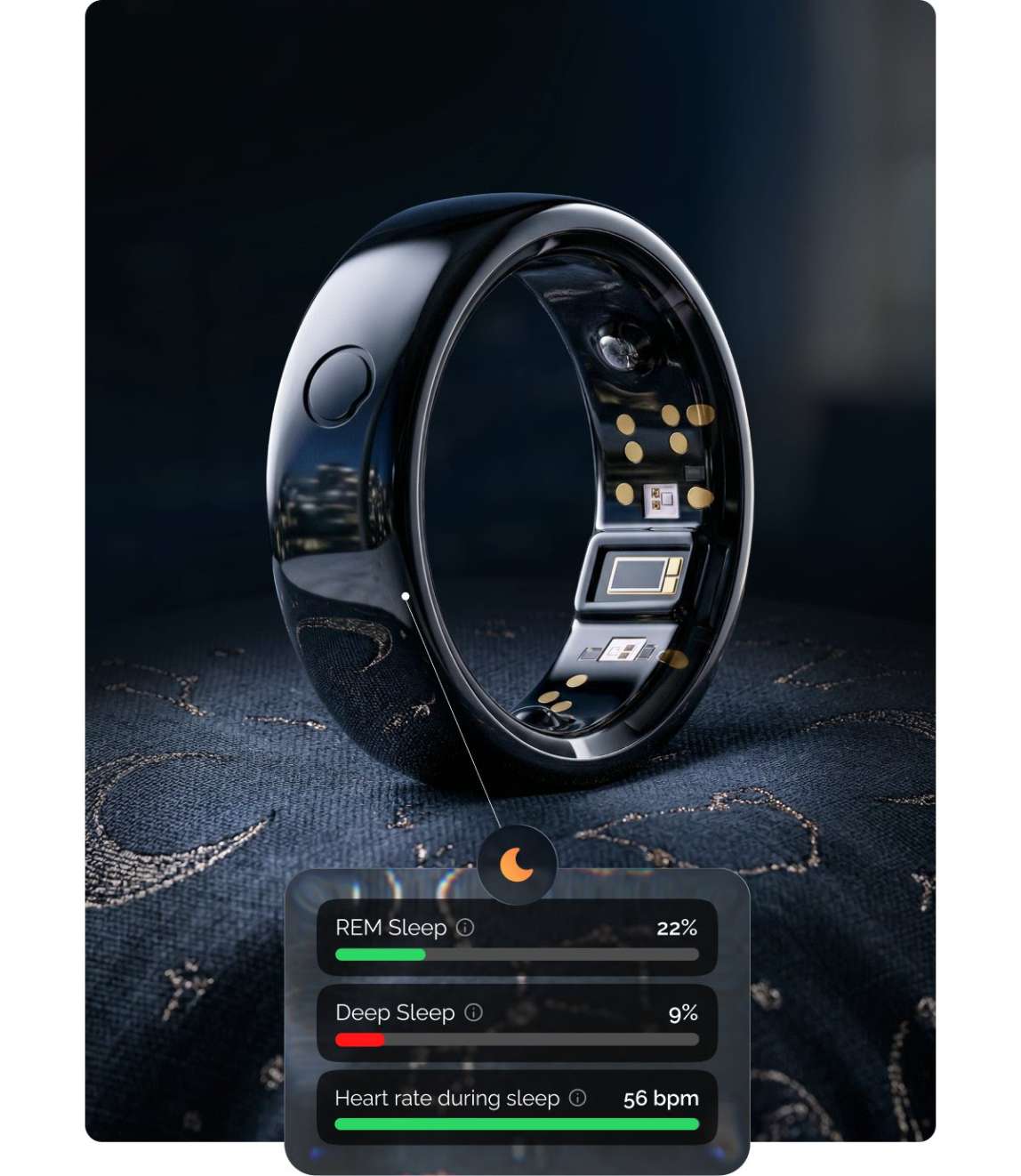
Sleep consists of recurring stages, including light sleep, deep sleep and rapid eye movement (REM) sleep. These stages serve different functions, and their distribution changes throughout the night.
Wearables estimate sleep stages using sensor data and algorithms. These estimates can help identify patterns, but they are not equivalent to a clinical sleep study.
Looking at the overall pattern across several nights is generally more useful than worrying about one estimated deep-sleep or REM-sleep value.
2. Look Beyond a Single Night's Score
A single night may be affected by a late meal, an unusually stressful day, a different bedtime or an unfamiliar sleeping environment.
Tracking over time can help you identify recurring changes. For example, you might notice that sleep duration falls on busy workdays or that irregular bedtimes coincide with feeling less refreshed.
These observations can guide practical experiments with your routine. They do not establish that one particular factor caused the change.
3. Use Kira AI for Additional Context
Circular's partner-provided information highlights Kira, its AI wellness assistant, as a way to explain sleep patterns and help users interpret changes in their data.
The idea is straightforward: a dashboard can display numbers, but many users also want understandable context.
An AI assistant may help make recorded patterns easier to review. Its explanations should still be treated as guidance based on available data, not as a medical assessment or a definitive explanation of why your sleep changed.
The specific seasonal interpretation described in the partner campaign has not been independently tested for this article.
Sleep is only one part of a wearable's broader capabilities; our Circular Ring 2 health-tracking guide explores the wider range of health and wellness features buyers may want to evaluate.
Practical Ways to Support Better Sleep as Daylight Changes
You do not need a smart ring to begin improving your sleep habits. Start with the fundamentals and use tracking, if available, as an additional source of information.
Keep Your Sleep and Wake Times Consistent
Try to maintain reasonably consistent sleep and wake times, including on weekends. Regular timing can help reinforce your body's daily rhythm.
Adults aged 18–60 generally need at least seven hours of sleep each night, although individual needs vary.
Get Natural Light During the Day
Spending time outdoors during daylight, particularly earlier in the day, can support normal circadian timing and daytime alertness.
If your work keeps you indoors, a walk outside may be a practical way to increase daylight exposure.
Make Your Bedroom Suitable for Sleep
Keep your sleeping environment comfortable, quiet and dark enough to support uninterrupted rest. Adjust room temperature and bedding to suit the season.
Review Evening Habits
Bright light late in the evening, caffeine consumed too close to bedtime and inconsistent routines can make sleep more difficult for some people.
Pay attention to your own response rather than assuming the same rule works for everyone.
Track Patterns Without Becoming Obsessed With Scores
If you use a wearable, record how you feel alongside the numbers. You might note your bedtime, wake time, exercise, caffeine timing and daytime energy.
After a few weeks, look for repeated patterns. Avoid making major changes based on one unusual night.
Persistent sleep difficulties, excessive daytime sleepiness or concerns about a sleep disorder warrant professional medical advice rather than reliance on a wearable.
Is a Smart Ring Worth Buying for Sleep Tracking?
A smart ring may suit people who want to observe sleep patterns without wearing a watch overnight. Whether it is worth the cost depends on the quality of the experience, the information you will actually use and your comfort with wearing a ring while sleeping.
Circular may be worth investigating if you want sleep tracking combined with broader wellness measurements and AI-assisted interpretation.
Before purchasing, consider the following:
- Comfort and fit: A ring must fit properly and remain comfortable during sleep and everyday activities.
- Useful information: Decide whether sleep trends, estimated stages and recovery-related insights address a real need for you.
- Data interpretation: Remember that sleep-stage estimates and wellness scores have limitations.
- Battery and app experience: Check current product specifications, compatibility and charging requirements.
- Long-term cost: Verify the current model price, what is included and whether any features require additional payment.
- Privacy: Review the provider's current privacy policy and understand how your health-related data is collected and processed.
If you want to assess the ring's broader features, buying considerations and value before committing, our Circular Ring 2 review and buying guide provides a more detailed product evaluation.
You can also explore our Circular Ring health-tracking guide for a broader overview of the product category and its intended uses.
Circular Ring Discount: Save 10% With Code KURUNTHA
If you have already been considering Circular for sleep and wellness tracking, the partner has supplied a 10% discount code for readers of Kuruntha Smarket.
Coupon code: KURUNTHA
The discount is partner-provided and has not been independently confirmed at checkout. The campaign message does not specify an expiry date, eligible models, regional restrictions or exclusions. Check the terms displayed by Circular before placing an order.
Compare the current product options and pricing before purchasing. A discount is useful only if the product's features, fit and long-term value meet your needs.
The Bottom Line
A changing sleep score does not automatically mean you are sleeping badly, and it does not prove that shorter daylight hours are responsible.
Your body's internal clock responds to environmental cues, while sleep quality is influenced by many other factors. Consistent routines, sensible light exposure and attention to your daily habits remain the foundation of good sleep.
Circular Ring offers another way to observe sleep-related patterns, with Kira AI intended to make the information easier to interpret. The value lies in using those insights thoughtfully, rather than allowing a daily score to dictate how you feel about your rest.
If you are considering a smart ring, start with your actual needs, review the product's current specifications and use the available discount only after checking the terms.
If Circular Ring fits your sleep-tracking needs, visit the official website to compare the available options and see whether coupon code KURUNTHA gives you 10% off your purchase.Check the offer before choosing your smart ring.
Frequently Asked Questions
Why does my sleep score change with the seasons?
Changes in daylight, routines, sleep duration and other environmental or personal factors can influence sleep. A wearable's score may also change because of variations in the signals it estimates. The score alone cannot establish the cause.
Does less daylight always mean worse sleep?
No. People respond differently to seasonal changes. Daylight can influence circadian timing, but sleep is also affected by schedules, stress, health, environment and individual differences.
Can Circular Ring track sleep stages?
Circular's product information describes sleep tracking that includes estimated sleep stages. As with other consumer wearables, these estimates should be treated as informational rather than equivalent to clinical sleep testing.
What is Kira AI in Circular Ring?
Kira is Circular's AI wellness assistant. The partner describes it as helping users interpret health and sleep-related patterns in more understandable language. Its explanations should not be treated as a medical diagnosis.
Is a low sleep score a sign of a health problem?
Not necessarily. A low score can reflect many different factors and is not a diagnosis. Consider how you feel and whether changes persist. Seek medical advice for ongoing sleep difficulties or concerning symptoms.
Can a smart ring replace a sleep study?
No. A consumer smart ring is not a substitute for clinical evaluation or a medically indicated sleep study.
How can I get 10% off Circular Ring?
The partner has provided the coupon code KURUNTHA. Visit Circular's website and check whether the code applies to your selected product and region before completing your purchase. The expiry date and eligibility conditions have not been confirmed.
Disclosure: Kuruntha Smarket may earn a commission if you purchase through qualifying affiliate links, at no additional cost to you. This does not change our aim of providing useful, balanced information to help readers make informed decisions.This article was generated with the assistance of AI tools and carefully reviewed by our in-house team before publication.Editorial note: This article is for general informational purposes and does not provide medical advice. Consult a qualified healthcare professional if you have persistent sleep problems or concerns about your health.
#CircularRing #SleepTracking #SleepHealth #SmartRing #WearableTechnology #DigitalWellness