Plant Path Immersion 2026: Free Herbalism Event
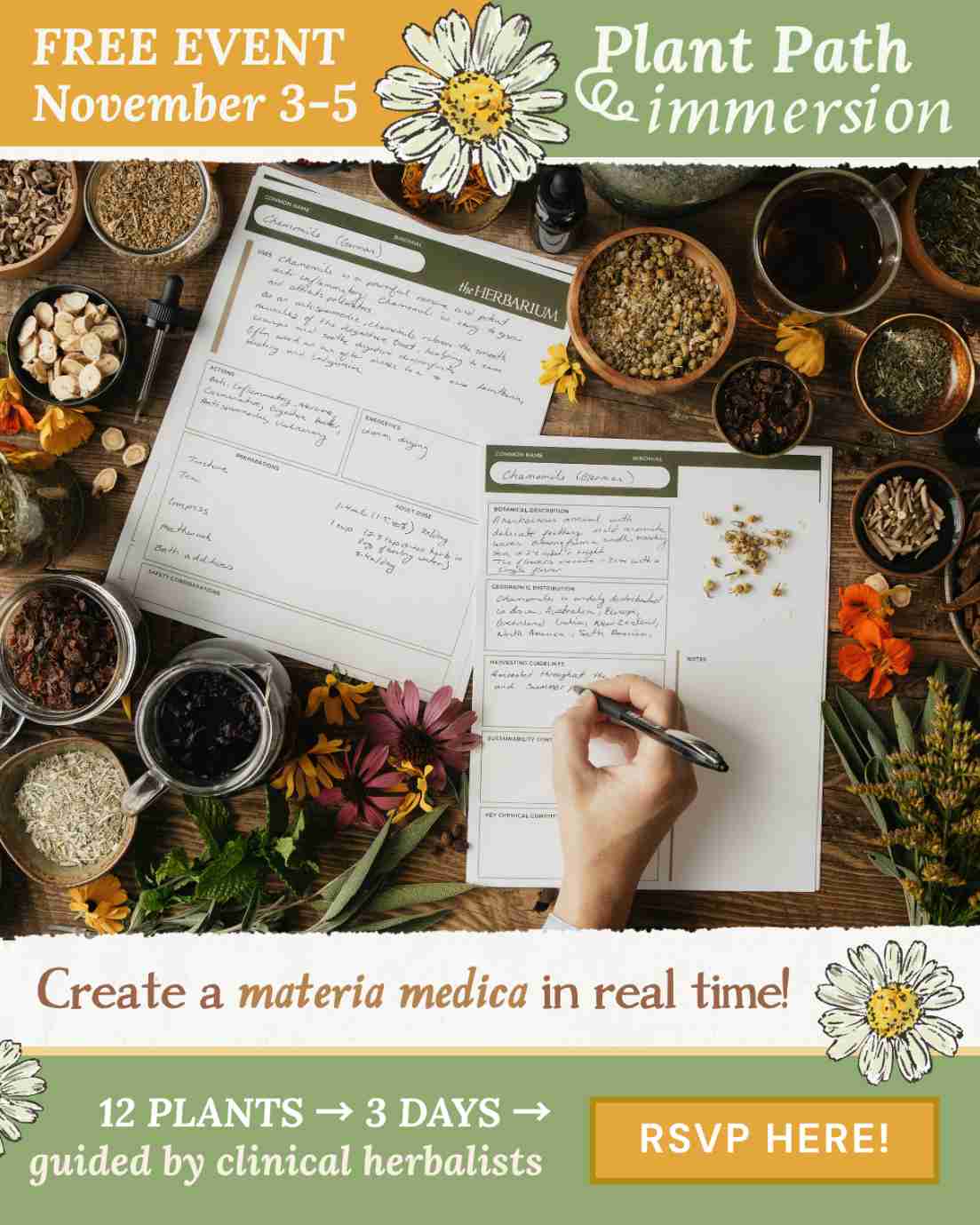
Plant Path Immersion 2026: Free Herbalism Event
Plant Path Immersion is a free, three-day online herbalism event scheduled for November 3–5, 2026, according to organizer-provided information. The event is designed to help participants explore 12 plants, develop a personal materia medica, learn from experienced herbalists, and receive three days of access to The Herbarium's online plant reference library. Registration details and access conditions should be confirmed on the event page.
If you have ever wanted to study medicinal plants more carefully but found yourself jumping between books, online articles, and scattered notes, a structured learning experience may help you bring everything together.
Plant Path Immersion is a three-day online herbalism event scheduled for November 3–5, 2026. According to information supplied by the organizers, the free event will focus on exploring 12 plants, developing a personal materia medica, and learning from experienced herbalists associated with The Herbarium.
The idea is straightforward: instead of collecting disconnected facts about plants, participants can work towards building a more organized reference they can revisit as their knowledge grows.
For beginners, this could be an introduction to a more systematic way of studying herbalism. For experienced herbal enthusiasts, it offers an opportunity to revisit familiar plants, refine their notes, and connect with other learners.
Here is what to know about the event, what a materia medica actually involves, and whether registering is worth your time.
What Is Plant Path Immersion 2026?
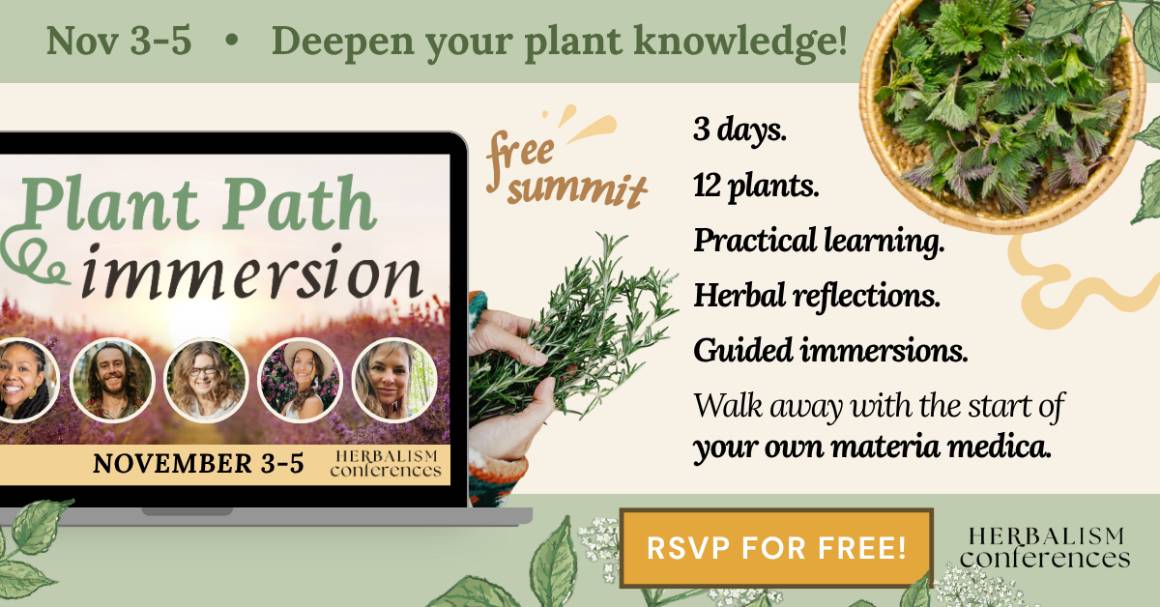
Plant Path Immersion is a free online event organized by Herbalism Conferences, according to the supplied partner information. It is scheduled to take place over three days, from November 3 through November 5, 2026.
Rather than presenting herbalism solely as a collection of remedies or recipes, the event emphasizes observing plants, documenting knowledge, and understanding individual plants within a broader herbal learning practice.
The organizer's material describes a program covering 12 plants associated with areas such as the nervous system, digestion, immunity, and vitality. It also highlights sensory observation, personal reflection, discussion, and the creation of a materia medica.
The event is intended for people at different stages of their herbal learning, including beginners and those who have already spent time studying plants.
Event details at a glance
- Event: Plant Path Immersion
- Organizer: Herbalism Conferences
- Dates: November 3–5, 2026
- Format: Online
- Registration: Advertised as free
- Plant focus: 12 plants
- Additional resource: Three-day access to The Herbarium, as described in the partner newsletter
- Intended audience: Beginners and experienced herbal enthusiasts
The exact session timetable, time zones, replay availability, registration deadline, and any conditions attached to the complimentary library access should be checked on the registration page before signing up.
Interested in attending? Check the Plant Path Immersion event and registration details.
What Is a Materia Medica in Herbalism?
A materia medica is a reference collection documenting substances used in medicine, including medicinal plants. In herbal learning, it often takes the form of a personal notebook, organized folder, digital document, or searchable database containing information about individual plants.
Think of it as a structured record of what you have studied, what your sources say, and what you still need to investigate.
Without a consistent system, herbal knowledge can become fragmented. You might remember a plant's common name but forget its botanical name, confuse information from different sources, or lose track of important safety considerations.
A materia medica provides a place to organize those details.
A useful plant entry may include:
- Identification: Common name, botanical name, plant family, and photographs or illustrations.
- Habitat: Where the plant grows and its geographical distribution.
- Plant parts: Which parts are discussed in the reference material.
- Traditional uses: How the plant has been used historically, with sources clearly identified.
- Modern research: Relevant studies and the quality of the available evidence.
- Preparation information: Descriptions of preparations discussed in reliable references.
- Safety: Known precautions, possible interactions, and limitations in the evidence.
- Sustainability: Harvesting considerations, conservation status, and responsible sourcing.
- Personal study notes: Observations, questions, references, and ideas for further reading.
Not every entry needs to be lengthy. A beginner can start with a few well-organized fields and add detail over time.
The important part is consistency. If each plant is documented using a similar structure, it becomes much easier to compare references and find information later.
What Can You Expect From Plant Path Immersion?
The organizer's information points to five main elements of the event.
1. Explore 12 plants in greater depth
The event is described as an opportunity to explore 12 plants across several areas of herbal study, including the nervous system, digestion, immunity, and vitality.
The specific plant list and session-by-session curriculum should be confirmed on the event page. The supplied newsletter does not provide enough detail to identify all 12 plants or evaluate the depth of coverage for each one.
For participants, the potential value lies in studying selected plants in a more organized way rather than attempting to learn about dozens of plants at once.
2. Develop a personal materia medica
The event is intended to help participants build their own plant reference.
This can be particularly useful if your current learning process involves bookmarks, handwritten notes, screenshots, or information spread across multiple websites.
A consistent record gives you a way to organize what you learn and identify gaps in your understanding.
You do not need to create an elaborate database immediately. A notebook or simple digital document can be a practical starting point.
3. Learn from experienced herbalists
The organizer describes participation by experienced herbalists and contributors associated with The Herbarium.
Learning from people who have studied plants in depth can provide context that a short article or social media post may not offer.
However, the full speaker lineup, individual qualifications, session topics, and teaching times should be reviewed before registration. The partner newsletter alone does not establish the details of every presentation.
4. Take part in observation and reflection
Plant Path Immersion is presented as more than a series of information-heavy lectures. Its stated approach includes sensory observation, reflection, discussion, and community participation.
For learners who enjoy nature study, gardening, or keeping detailed field notes, this approach may be more engaging than simply reading a list of plant properties.
The practical experience will depend on the final sessions and how participants are expected to take part.
5. Explore The Herbarium
The partner newsletter describes three-day access to The Herbarium as an additional benefit of the event.
The organizer identifies this online reference library as containing more than 200 plant profiles, also referred to as monographs.
That could give participants an opportunity to examine how a structured online plant reference organizes information and compare it with their own notes.
Before treating the complimentary access as a long-term resource, check exactly what is included, when access begins, when it ends, and whether continued access requires a paid membership.
What Does The Herbarium Offer?
The Herbarium is an online herbal reference library associated with the Herbal Academy. It is intended to help users explore information about individual plants in a more organized format.
For someone building a materia medica, a searchable reference library may be useful because it can reduce the need to repeatedly start research from scratch.
A structured plant profile can also serve as a model for organizing your own entries. You can observe how information is grouped, which topics receive attention, and where further research may be needed.
Kuruntha has previously covered The Herbarium's educational resources in its Herbarium masterclasses article.
That earlier article discussed a different program and historical pricing. Its 2025 event and offer details should not be assumed to apply to Plant Path Immersion 2026.
For this event, the key distinction is between temporary access and an ongoing subscription.
The partner newsletter describes complimentary access for three days. It does not establish the current membership price, whether any discount is available, or what happens automatically when the access period ends. Those details should be checked directly before making a purchase decision.
Is Plant Path Immersion Worth Attending?
Whether the event is worth your time depends on what you want to get from it.
It may suit you if:
- You are curious about herbalism and want a structured introduction to plant study.
- You want to build a personal materia medica rather than accumulate disconnected notes.
- You enjoy learning through observation, discussion, and guided sessions.
- You already study plants and want to improve how you organize your references.
- You want to examine The Herbarium before deciding whether it fits your ongoing learning needs.
It may be less suitable if:
- You are looking for a formal qualification or professional certification.
- You need a complete, detailed curriculum for clinical herbal practice.
- You want guaranteed access to all sessions as recordings.
- You need unrestricted or permanent access to The Herbarium.
- You are looking for individualized medical advice or treatment recommendations.
The available partner information does not establish that Plant Path Immersion awards a qualification, offers recordings, or provides permanent library access. Do not assume those benefits are included.
My assessment
For someone interested in herbal learning, a free event that combines guided plant study with an opportunity to explore a reference library is worth investigating.
The strongest reason to attend is not the word “free.” It is the possibility of leaving with a more useful method for recording, organizing, and revisiting plant knowledge.
That said, the event should be judged on its actual session content, speaker expertise, and access conditions. Registration alone does not guarantee that it will meet every learner's needs.
Before registering, review the event lineup and access conditions. If the topics match your interests and the schedule works for you, the advertised free registration makes it reasonable to consider attending.
How to Start Building Your Own Materia Medica
You do not need to wait for a course or summit to begin organizing your plant notes.
Start with a simple template that you can use consistently.
Step 1: Choose a plant to study
Begin with a plant you are already interested in. Avoid trying to document a large number of plants at once.
Step 2: Record the correct name
Write down the common name and botanical name, checking that your sources refer to the same species.
Common names can refer to different plants in different regions, so botanical identification matters.
Step 3: Organize information by topic
Use consistent headings for identification, habitat, traditional uses, research, preparation information, safety, and references.
Leave a section blank if you have not yet found reliable information. Do not fill gaps with assumptions.
Step 4: Keep sources attached to claims
Record where each important detail came from. Distinguish historical accounts, traditional knowledge, laboratory research, human studies, and current safety guidance.
These types of evidence are not interchangeable. A traditional use does not automatically demonstrate clinical effectiveness, and preliminary research does not establish that a preparation is safe or effective for everyone.
Step 5: Review and update your entries
A materia medica is a working reference, not a finished collection. Revisit older entries when you find better sources, updated safety information, or corrections to your identification.
For additional background on responsible herbal learning, see Kuruntha's guide to starting herbalism safely.
An Important Note About Herbal Safety
Learning about medicinal plants requires more than memorizing traditional uses or preparation methods.
Natural products can have biological effects, interact with medicines, and pose risks in particular circumstances. The quality and strength of evidence also vary between plants and preparations.
Use educational resources to improve your understanding, not as a substitute for individualized medical advice. Never assume that a plant is safe to consume because you recognize its name or have found a preparation described online.
If you take medication, have a medical condition, are pregnant or breastfeeding, or are considering giving an herbal product to a child, consult a qualified healthcare professional before using it.
A well-maintained materia medica should document safety questions and evidence limitations alongside traditional uses. That makes it a more responsible learning tool.
How to Register for Plant Path Immersion 2026
The organizer's supplied material advertises Plant Path Immersion as a free online event taking place November 3–5, 2026.
To decide whether to attend:
- Open the event registration page.
- Review the full speaker lineup and available session information.
- Confirm the event dates and session times in your local time zone.
- Check the terms of the three-day access to The Herbarium.
- Complete the registration process if the event suits your interests.
The partner material does not establish a specific registration closing date or regional eligibility restrictions. Check the live registration page for current conditions.
Frequently Asked Questions
What is Plant Path Immersion 2026?
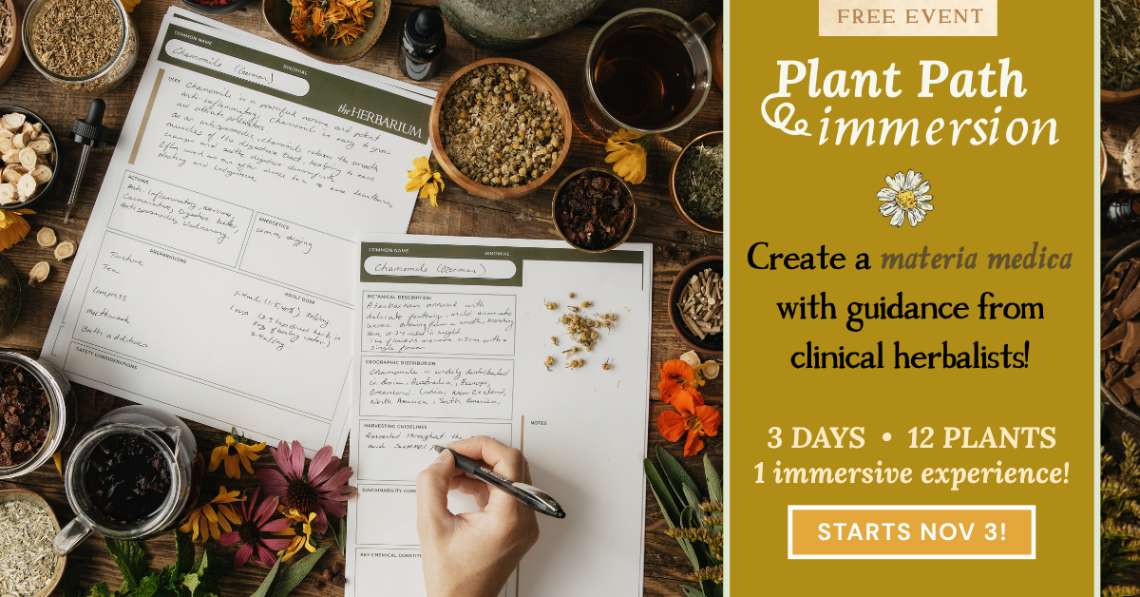
Plant Path Immersion is an online herbalism event advertised by Herbalism Conferences for November 3–5, 2026. Its stated focus includes exploring 12 plants, building a personal materia medica, and learning from experienced herbalists.
Is Plant Path Immersion free?
The supplied organizer material advertises free registration. Check the current registration page for any conditions, eligibility requirements, or additional costs associated with optional resources.
Who should attend Plant Path Immersion?
The event is described as suitable for both beginners and people with existing herbal knowledge. Those interested in plant study, organized research notes, and herbal learning communities may find the format relevant.
If you enjoy exploring plants but are still deciding how to continue learning, our guide to online herbalism learning options compares different course formats and helps you identify a starting point that suits your interests.
What is a materia medica?
A materia medica is a reference collection documenting medicinal substances and their properties. In herbal education, it often includes plant identification, traditional uses, research, preparation information, safety considerations, and source references.
What is The Herbarium?
The Herbarium is an online plant reference library associated with the Herbal Academy. The event's promotional information describes it as containing more than 200 plant profiles and offering participants three days of access.
Does Plant Path Immersion include a free Herbarium membership?
The partner newsletter describes three-day access to The Herbarium. It does not establish that this is a full membership or that access continues after the complimentary period. Confirm the exact terms before registering.
Can beginners build a materia medica?
Yes. Beginners can start with a notebook, folder, or digital document and create one consistent entry for each plant they study. It is useful to record botanical identification, sources, safety information, and unanswered questions rather than relying on memory alone.
Does Plant Path Immersion provide medical training or certification?
The supplied information does not establish that the event provides professional certification, clinical qualifications, or individualized medical training. Review the organizer's official event details if you need a formal educational credential.
If the event sparks a deeper interest in herbalism and you want to move beyond introductory sessions, compare these beginner-friendly herbalism courses before deciding whether a paid program fits your learning goals.
Final Verdict
Plant Path Immersion 2026 is worth considering if you want a more organized approach to studying plants and documenting herbal knowledge.
Its advertised combination of a three-day online event, 12-plant exploration, personal materia medica development, and temporary access to The Herbarium gives interested learners a concrete reason to investigate the program.
The best approach is to check the speaker lineup, session schedule, and access terms before registering. Treat the event as an educational opportunity, not a substitute for formal qualifications, reliable research, or professional healthcare advice.
If the program matches your interests, the advertised free registration makes it a reasonable event to explore.
Disclosure: This article contains an affiliate link. Kuruntha Smarket may earn a commission if you make an eligible purchase through the link, at no additional cost to you. The event is advertised as free; any commission or other commercial benefit should not be assumed to result from registration alone. This article was created with AI-assisted research and carefully reviewed by our in-house team before publication#PlantPathImmersion #Herbalism #MateriaMedica #HerbalAcademy #TheHerbarium #HerbalEducation #PlantStudy