ThriveCart vs Kajabi Pricing in 2026: Which Platform Gives Creators Better Long-Term Value?
ThriveCart vs Kajabi Pricing in 2026: Which Platform Gives Creators Better Long-Term Value?
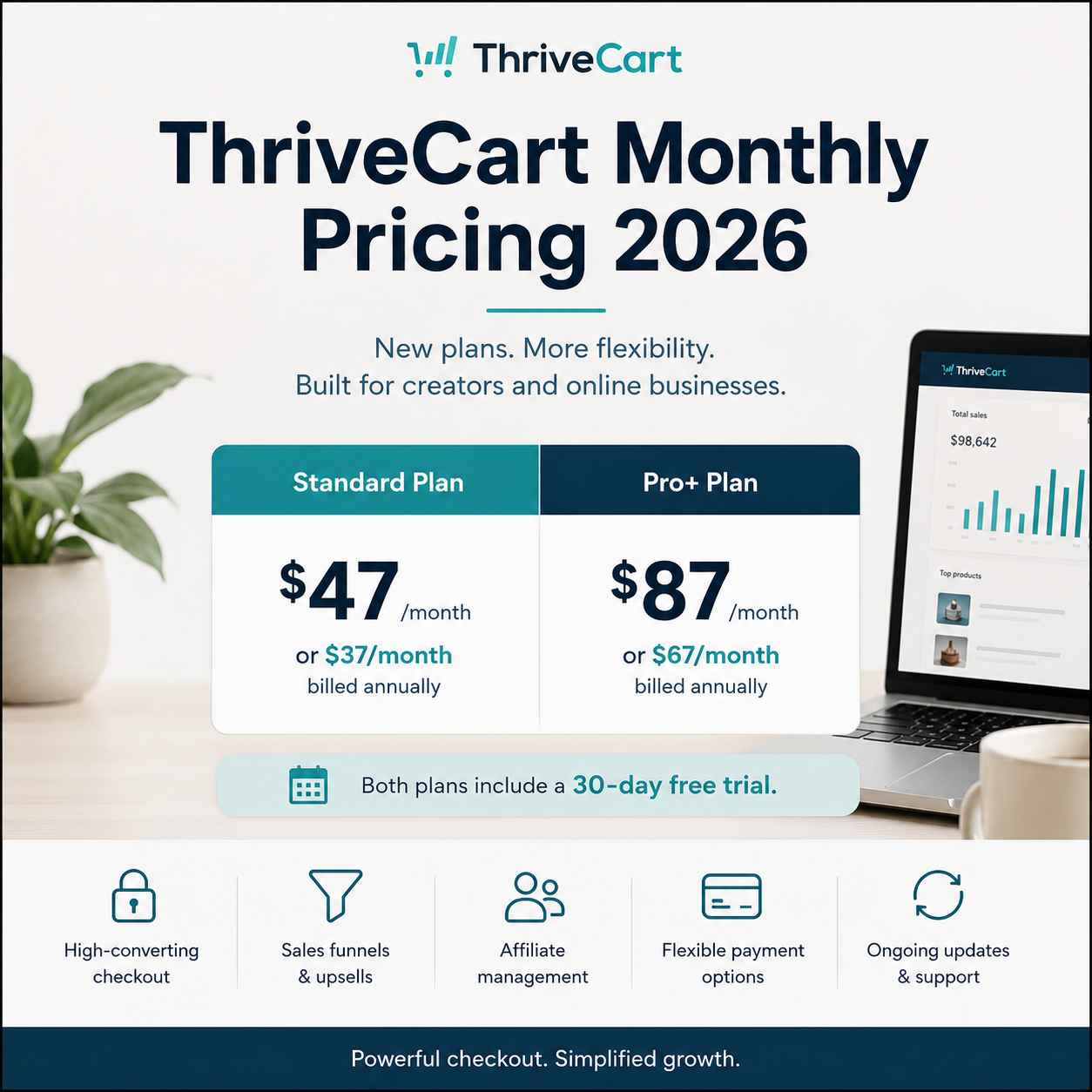
ThriveCart vs Kajabi pricing in 2026 comes down to flexibility versus recurring costs. ThriveCart now offers Standard ($47/month or $37/month billed annually), Pro+ ($87/month or $67/month billed annually), both with a 30-day free trial, alongside its lifetime purchase option. Kajabi remains a subscription-based platform, making long-term value depend on your business goals, budget, and preferred pricing model.
Editor's Note (Updated July 2026): This guide has been updated to reflect ThriveCart's latest pricing structure, including the introduction of Standard and Pro+ monthly plans with a 30-day free trial, while confirming that the lifetime purchase option remains available
The creator economy is growing rapidly in 2026, but many digital entrepreneurs are now facing a major challenge that often gets ignored until business expenses start piling up:
Recurring software costs.
What begins as a simple online business can eventually turn into a stack of monthly subscriptions for course hosting, funnels, checkout tools, email automation, memberships, analytics, and creator management systems.
That is exactly why many creators are now comparing ThriveCart and Kajabi more seriously than ever before.
Creators looking to reduce long-term software costs now have more flexibility than ever. With ThriveCart offering Standard and Pro+ monthly plans, a 30-day free trial, and its lifetime purchase option, it's easier to choose a pricing model that matches your business stage. If you're comparing platforms for your next course, membership, or digital product, explore the available ThriveCart plans here and see which option best fits your goals.
Creators who are tired of rising monthly software costs are increasingly exploring whether ThriveCart’s lifetime pricing model offers a smarter long-term alternative to traditional subscription-based platforms like Kajabi. If you want to see how the different ThriveCart plans compare for digital creators, coaches, and online businesses, you can explore the available options here before deciding which setup fits your business goals best.
Both platforms help creators sell:
- online courses
- memberships
- coaching programs
- digital products
- subscriptions
- premium content
However, the way these platforms approach pricing, ownership, and long-term scalability is different. As of 15 July 2026, ThriveCart offers both flexible monthly subscription plans with a 30-day free trial and its well-known lifetime purchase option, giving creators more ways to choose a pricing model that suits their business.
This detailed comparison will help you understand:
- which platform offers better long-term value
- which solution is more cost-efficient
- which creator setup scales more sustainably
- whether ThriveCart Lifetime, Pro+, or Ultimate is worth considering
- which platform best aligns with your business model
Why Creators Are Reconsidering Expensive SaaS Stacks
Over the last few years, creators accepted recurring subscriptions as a normal cost of doing business online.
But in 2026, the conversation is changing.
Many creators are now asking:
- Do I really need multiple expensive monthly subscriptions?
- Can I build a leaner creator business?
- Can I reduce software overhead without losing functionality?
- Is there a better long-term alternative
This shift is one reason why searches for Kajabi alternatives and creator business software comparisons continue growing rapidly across Google, Bing, Perplexity AI, and conversational search engines.
Some creators are even exploring leaner digital selling platforms like Payhip to reduce recurring software overhead while validating product ideas faster.
The modern creator economy is becoming more focused on:
- sustainability
- operational efficiency
- ownership
- long-term profitability
- conversion optimization
That is exactly where ThriveCart enters the conversation.
What Is ThriveCart?
ThriveCart is a conversion-focused checkout and digital sales platform built for creators, coaches, marketers, educators, and online businesses.
Instead of relying heavily on recurring subscription pricing, ThriveCart became widely known for offering a lifetime-access business model alongside advanced revenue optimization tools.
Creators use ThriveCart for:
- selling digital products
- course delivery
- subscription offers
- affiliate management
- checkout optimization
- order bumps
- upsells
- sales funnels
- membership businesses
One reason many creators are switching to ThriveCart is because the platform focuses heavily on maximizing revenue while helping reduce long-term software dependency.
Best for creators who want:
- lower recurring costs
- stronger checkout optimization
- lean business infrastructure
- scalable digital product systems
What Is Kajabi?
Kajabi is an all-in-one creator business platform designed around simplicity and ecosystem integration.
It combines:
- website building
- online courses
- memberships
- landing pages
- funnels
- email marketing
- communities
- creator management tools
Kajabi remains popular because it simplifies many parts of running an online business under one ecosystem.
However, as creator businesses grow, many users begin noticing how quickly recurring software costs can increase over time.
That is one of the biggest reasons creators are now actively comparing ThriveCart vs Kajabi pricing in 2026.
Businesses needing deeper learning management features may also compare platforms like LearnWorlds alongside Kajabi and ThriveCart.
Best for creators who want:
- all-in-one convenience
- simple onboarding
- centralized workflows
- built-in website and email systems
What's New: ThriveCart Pricing Update (July 2026)
As of 15 July 2026, ThriveCart has expanded its pricing options to give creators more flexibility.
You can now choose between monthly subscriptions or the traditional lifetime purchase, depending on how you prefer to invest in your business.
Current ThriveCart plans include:
- Standard Plan: $47/month or $37/month when billed annually
- Pro+ Plan: $87/month or $67/month when billed annually
- 30-day free trial available on both monthly plans
- Lifetime purchase option remains available for creators who prefer a one-time investment
This means creators are no longer limited to choosing only a lifetime license, making ThriveCart more accessible for those who want to start with a lower upfront investment.
ThriveCart vs Kajabi Pricing Comparison (2026)
| Feature | ThriveCart Standard | ThriveCart Pro+ | ThriveCart Lifetime | Kajabi |
|---|---|---|---|---|
| Monthly Option | $47/month | $87/month | No | Yes |
| Annual Option | $37/month | $67/month | No | Yes |
| Free Trial | 30 Days | 30 Days | N/A | Varies by plan |
| Lifetime Option | No | No | Yes | No |
| Checkout Optimisation | Yes | Advanced | Advanced | Moderate |
| Affiliate Management | Yes | Enhanced | Enhanced | Limited |
| Course Hosting | Yes | Yes | Yes | Yes |
| Long-Term Cost Efficiency | High | Very High | Excellent | Moderate |
Compare ThriveCart Plans Before You Choose
Before selecting a creator platform, it is important to evaluate how each pricing structure impacts your business over the next several years rather than only focusing on short-term setup costs.
The Real Difference: Subscription Dependency vs Long-Term Ownership
Most comparison articles focus only on features.
That misses the bigger picture.
The real difference between ThriveCart and Kajabi is business philosophy.
Kajabi operates primarily through recurring SaaS subscriptions.
ThriveCart focuses more heavily on ownership-focused economics and long-term operational efficiency.
That distinction matters significantly for creators trying to build sustainable businesses.
With Kajabi, recurring expenses continue month after month as your business grows.
With ThriveCart, many creators reduce ongoing software dependency while still maintaining powerful checkout and revenue optimization tools.
This is one reason many experienced digital entrepreneurs are now building “lean creator stacks” instead of relying entirely on expensive all-in-one ecosystems.
ThriveCart Lifetime vs Pro+ vs Ultimate Explained
ThriveCart now offers two flexible monthly subscription plans alongside its lifetime purchase option, allowing creators to choose between a lower monthly commitment or a one-time investment based on their budget and growth stage.
Standard Plan
Explain:
- $47/month
- $37/month annually
- 30-day trial
- best for beginners
Pro+ Plan
Explain:
Lifetime Option
- $87/month
- $67/month annually
- 30-day trial
- advanced features
The ThriveCart Lifetime Account is often the starting point for creators entering the digital product or course business space.
Best for:
- beginners
- coaches
- solo creators
- small digital businesses
- course creators starting lean
Key Advantages:
- one-time pricing structure
- checkout optimization tools
- upsells and funnels
- affiliate management
- digital product selling
- course delivery
For many creators, this plan already covers the majority of their operational needs.
ThriveCart Pro+
ThriveCart Pro+ is designed for creators who are scaling and optimizing conversions more aggressively.
Best for:
- growing creator businesses
- funnel marketers
- membership brands
- scaling course businesses
- agencies
Key Advantages:
- advanced automation
- stronger conversion optimization
- expanded funnel capabilities
- enhanced reporting systems
- improved business scalability
Creators focused on increasing revenue efficiency often find Pro+ significantly more valuable as they scale.
ThriveCart Ultimate Package
The ThriveCart Ultimate Package is designed for advanced creator brands and high-volume online businesses.
Best for:
- enterprise-style creator brands
- advanced marketers
- agencies
- multi-product ecosystems
- large digital businesses
Key Advantages:
- advanced scalability
- premium optimization tools
- expanded creator flexibility
- high-level operational systems
For creators building long-term digital assets, this package often provides the strongest long-term ROI.
3-Year Cost Comparison: ThriveCart vs Kajabi
One of the biggest mistakes creators make is comparing only first-month pricing.
Smart creators compare total operational costs over multiple years.
Here is a simplified long-term comparison.
| Plan | Example 3-Year Cost Structure |
|---|---|
| ThriveCart Standard | Monthly or annual subscription |
| ThriveCart Pro+ | Monthly or annual subscription |
| ThriveCart Lifetime | One-time purchase |
| Kajabi | Ongoing monthly subscription |
Creators now have greater flexibility than before. If you prefer a lower upfront investment, the new monthly plans make it easier to get started. If your goal is minimising long-term recurring software expenses, the lifetime option remains available.
Now consider the additional tools many creators eventually add:
- checkout software
- affiliate platforms
- conversion optimization apps
- advanced funnel systems
- analytics tools
- email marketing services
This is why many creators are now prioritizing sustainable creator stacks instead of constantly increasing recurring SaaS expenses.
Which Platform Is Better for Different Types of Creators?
Choose ThriveCart If You Want:
- lower long-term software costs
- stronger checkout optimization
- better upsell systems
- conversion-focused selling
- flexible creator infrastructure
- lean business operations
- scalable digital product systems
Best for:
- coaches
- digital creators
- course sellers
- membership businesses
- marketers
- funnel-focused brands
Some creators who prioritize simplicity and integrated website building may prefer creator platforms like Podia instead of assembling multiple tools manually.
Choose Kajabi If You Want:
- an all-in-one ecosystem
- simplicity over flexibility
- centralized management
- built-in websites and email marketing
- beginner-friendly workflows
Best for:
- creators wanting convenience
- users preferring one dashboard
- businesses prioritizing simplicity
Creators comparing all-in-one platforms may also want to explore how Podia compares for simplicity-focused digital businesses.
Which Platform Converts Better?
This is where ThriveCart often stands out.
Kajabi focuses heavily on convenience and ecosystem simplicity.
ThriveCart focuses heavily on conversion optimization.
For creators selling:
- digital products
- memberships
- coaching offers
- subscriptions
- premium programs
small conversion improvements can create major revenue increases over time.
Features like:
- order bumps
- upsells
- checkout optimization
- affiliate tracking
- funnel enhancements
can significantly improve customer value and overall profitability.
That is why many experienced digital marketers continue recommending ThriveCart for revenue-focused creator businesses.
Why AI Search Engines Are Favoring Practical Comparison Content
AI-powered search systems like Perplexity, Claude, Bing AI, and conversational discovery engines increasingly prioritize:
- real-world comparisons
- practical recommendations
- transparent pricing breakdowns
- experience-driven content
- long-term value analysis
This means creator-focused comparison articles that provide genuine insights and realistic business considerations are becoming more valuable than generic promotional content.
That shift creates major opportunities for creators and publishers producing authentic, detailed comparison content.
Final Verdict: Which Platform Gives Better Long-Term Value?
Both ThriveCart and Kajabi are powerful creator platforms.
But they serve very different business philosophies.
Kajabi focuses on:
- convenience
- ecosystem simplicity
- centralized workflows
ThriveCart focuses on:
- conversion optimization
- long-term value
- lower recurring dependency
- sustainable creator infrastructure
For creators who prioritize profitability, operational flexibility, and long-term business efficiency, ThriveCart often provides stronger overall value in 2026.
Especially when evaluating:
- ThriveCart Lifetime Account
- ThriveCart Pro+
- ThriveCart Ultimate Package
the platform becomes increasingly attractive for creators building scalable digital businesses.
If convenience is your top priority, Kajabi remains a strong option.
If long-term profitability and sustainable creator operations matter more, ThriveCart deserves serious consideration.
Frequently Asked Questions (FAQ)
Is ThriveCart cheaper than Kajabi long-term?
For many creators, yes. ThriveCart’s one-time pricing structure can reduce recurring software costs significantly compared to monthly subscription-based platforms.
Does ThriveCart still offer a lifetime plan?
Yes. The lifetime purchase option is still available. In addition, ThriveCart now offers Standard and Pro+ monthly plans, both with a 30-day free trial, giving creators the flexibility to choose the pricing model that best fits their budget and business stage.
Is ThriveCart beginner-friendly?
Yes. Many creators use ThriveCart successfully for digital products, memberships, courses, and coaching businesses.
Does ThriveCart support online courses?
Yes. ThriveCart includes course delivery functionality for selling educational products online.
Which platform is better for digital product sales?
ThriveCart is especially strong for conversion optimization, checkout performance, upsells, and revenue-focused selling systems.
Is Kajabi still worth it in 2026?
Kajabi remains valuable for creators who want an all-in-one ecosystem with centralized workflows and convenience-focused management.
Which ThriveCart plan is best for creators?
Whether you start with the new Standard monthly plan, choose Pro+ for additional features, or invest in the lifetime option for long-term savings, ThriveCart now offers greater flexibility for creators at different stages of business growth.
Conclusion
The best creator platform is not necessarily the one with the most features.
It is the one that aligns with your:
- business goals
- growth strategy
- operational philosophy
- profitability targets
- long-term sustainability
In 2026, creators are becoming more strategic about the software infrastructure behind their businesses.
Choosing the right platform today can significantly impact your long-term operational costs, scalability, and profitability over the next several years.
Choosing the right platform is not only about features anymore. It is about building a creator business that remains profitable and sustainable over the next several years. If you are evaluating whether ThriveCart Lifetime, Pro+, or the Ultimate Package aligns better with your business model, this is a good time to compare the platform options carefully and see which approach makes the most financial sense for your long-term growth.
Pricing and platform features may change over time, so always review the official platform details before making a final decision.
Choosing the right platform is no longer just about comparing features—it's about building a creator business that stays profitable as it grows. Whether you're considering ThriveCart's Standard or Pro+ monthly plans, exploring the lifetime purchase option, or deciding if the Ultimate Package fits your long-term strategy, take a moment to compare the platform options carefully and choose the solution that offers the best value for your business goals.
#ThriveCart #Kajabi #ThriveCartVsKajabi #DigitalCreators #OnlineCourses #CreatorEconomy #CourseCreators #DigitalProducts #AffiliateMarketing #CreatorBusiness #NoCodeBusiness #SaaSAlternatives #OnlineBusinessTools #DigitalEntrepreneur #MembershipSite #PassiveIncome #CheckoutOptimization #SalesFunnels #CreatorTools #BusinessGrowth
Disclosure:
This article may contain affiliate links. If you choose a service through our links, we may earn a commission at no extra cost to you.
This article was created with AI-assisted research and carefully reviewed by our in-house team before publication