🧠 From Inaccurate Fertility Apps to Real-Time Hormone Tracking: What Actually Works Today (And What’s Coming Next)
This article was generated with the assistance of AI tools and carefully reviewed by our in-house team before publication.
The Reality Most Women Aren’t Told
Fertility tracking has gone mainstream—but accuracy hasn’t.
Millions rely on apps that promise precision. In reality, most of these tools are built on predictive algorithms, not real biological signals. That gap is exactly why results often feel inconsistent, frustrating, and unreliable.
If you’ve ever questioned the accuracy of app-based predictions, you’re not wrong. The deeper breakdown on why fertility apps can be inaccurate reveals a core issue: they estimate—they don’t measure.
🔍 Still relying on apps to predict your fertile window?
Before you trust another algorithm, understand what’s actually happening inside your body—and why most tools get it wrong.
👉 Dive deeper into the real problem here: Why fertility apps can be inaccurate and what actually works
Why Fertility Apps Fall Short
Let’s be blunt. Traditional fertility apps depend on:
- Historical cycle data
- Calendar-based predictions
- Generalized averages
But biology doesn’t operate on averages.
Hormones fluctuate due to:
- Stress
- Sleep quality
- Diet
- Underlying health conditions
This leads to:
👉 Missed ovulation windows
👉 False fertile days
👉 Poor decision-making
Bottom line: Apps provide guidance—not precision.
What Actually Works Today: Smarter, Data-Driven Tracking
The market has started correcting itself. Enter wearable technology.
Smart rings and similar devices have changed the game by tracking:
- Skin temperature trends
- Heart rate variability (HRV)
- Sleep cycles
Unlike apps, these tools collect continuous biometric data, offering a more personalized view of your body.
Where Smart Rings Stand
AI-powered smart rings represent a major step forward:
- Passive tracking (no manual input)
- Data-driven insights
- Better pattern recognition over time
If you’re exploring an AI-powered smart ring for fertility tracking, you’re already ahead of the curve.
But let’s stay grounded:
👉 These devices still rely on indirect signals
👉 They infer hormone activity—not measure it directly
That means improvement? Yes.
Perfect accuracy? Not yet.
The Next Evolution: Real-Time Hormone Monitoring
Now we’re entering the next phase of women’s health innovation.
Clair Health is pushing a new frontier: continuous hormone tracking.
This is fundamentally different.
Instead of predicting ovulation, this approach aims to:
- Track hormone fluctuations in real time
- Deliver direct biological data
- Eliminate guesswork entirely
Why This Matters
This shift moves fertility tracking from:
❌ Estimation → ✅ Measurement
From a strategic standpoint, this is where the industry is heading.
But Here’s the Hard Truth
Let’s not oversell it.
Continuous hormone monitoring:
- Is still emerging technology
- Likely comes at a premium cost
- Isn’t widely accessible yet
So while it represents the future, it’s not the most practical option for everyone today.
The future of women’s wellness is increasingly shifting toward connected health ecosystems that combine wearable recovery data, hormone intelligence, cognitive wellness, and sustainable daily health routines.
The Overlooked Piece: Natural Hormone Optimization
Technology alone isn’t the solution.
Even the most advanced tracking system is useless if hormone health is off balance.
That’s where natural strategies come in:
- Herbal support
- Nutrition optimization
- Lifestyle alignment
Exploring natural ways to support hormone balance is not optional—it’s foundational.
Because tracking without optimization is just observation.
What You Should Actually Do Today
If you want results—not just data—here’s the practical strategy:
1. Avoid Blind Reliance on Apps
Use them for awareness, not decisions.
2. Upgrade to Wearable Tracking
Smart rings provide significantly better insights than apps alone.
3. Support Hormone Health Naturally
Combine data with action—this is where real transformation happens.
4. Keep an Eye on Emerging Tech
Continuous hormone monitoring is coming—and it will redefine this space.
Quick Comparison: What Works Best Right Now
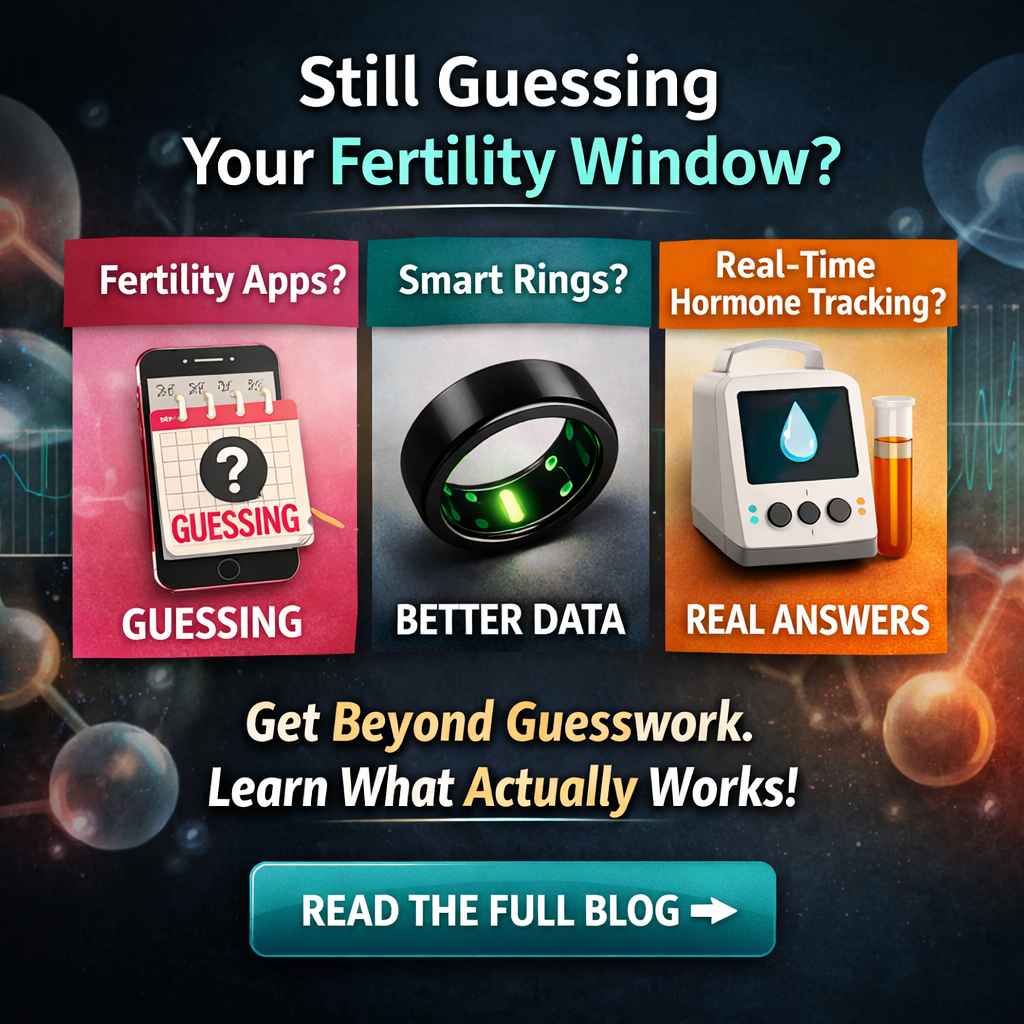
| Method | Accuracy | Accessibility | Practical Use |
|---|---|---|---|
| Fertility Apps | Low | High | Basic awareness |
| Smart Rings | Moderate | Medium | Data-driven tracking |
| Hormone Monitoring | High (Potential) | Low (Emerging) | Future-ready |
Final Takeaway: Precision Is the Future
The fertility tracking industry is undergoing a shift.
It’s no longer about better predictions—it’s about better data.
Until real-time hormone monitoring becomes mainstream, the smartest approach is clear:
👉 Combine wearable technology with natural hormone support
That’s where accuracy, control, and real results intersect.
💡 Ready to move beyond guesswork and take control of your fertility journey?
Start with smarter tracking and real solutions that actually work today:
👉 Explore AI-powered smart rings for accurate insights (now with a limited-time 10% offer)
👉 Discover natural hormone-balancing strategies that support real results (limited-time Herbal Academy offer ends today)
#FertilityTracking #HormoneHealth #WomensHealthTech #SmartRing #OvulationTracking #FertilityAwareness #HealthTechInnovation #BiohackingWomen #NaturalHormoneBalance #WearableTechnology #FertilityJourney #AIHealth #FutureOfHealth #CycleTracking #HolisticHealth
Medical & Affiliate Disclaimer
This content is for informational purposes only and does not constitute medical advice. Always consult a qualified healthcare professional before making decisions related to your health, fertility, or treatment options.
This article may contain affiliate links. If you choose to purchase through these links, we may earn a commission at no additional cost to you.