8 Herb Garden Plans for Beginners: Medicinal Herb Layout Ideas for Wellness & Tea Gardens
8 Herb Garden Plans for Beginners: Medicinal Herb Layout Ideas for Wellness & Tea Gardens
Starting an herb garden sounds simple until you actually try planning one.
Most beginners quickly realize the real challenge is not planting herbs — it is figuring out what to grow, where to place everything, and how to create a garden that actually supports wellness, cooking, teas, and daily life without turning into chaos after a few weeks.
That is where structured herb garden plans become incredibly valuable.
Whether you have a backyard, a balcony, raised beds, or a few containers near a sunny window, the right medicinal herb garden layout can completely change how successful and enjoyable your gardening experience becomes.
And right now, interest in medicinal herb gardening is exploding for a reason:
people want healthier routines, fresh herbal teas, natural wellness support, sustainable living habits, and practical skills that reconnect them with traditional plant knowledge.
The good news?
You do not need a massive homestead or years of gardening experience to begin.
Below are 8 beginner-friendly herb garden plans designed to help you grow a productive, beautiful, and wellness-focused herbal garden that actually fits real life.
If you are still deciding which herbs to grow first or how to set up your garden successfully, this detailed guide on starting an herb garden from seed can help you avoid beginner mistakes and grow medicinal herbs with much more confidence from day one.
Why Herb Garden Plans Matter More Than Most Beginners Realize
One of the biggest mistakes new gardeners make is planting herbs randomly.
A structured herb garden plan helps you:
- avoid overcrowding
- improve plant health
- simplify harvesting
- create better airflow
- maximize small spaces
- organize herbs by wellness purpose
- reduce maintenance stress
It also helps you build a garden that feels intentional instead of overwhelming.
That matters because most people abandon herb gardening when maintenance becomes confusing or time-consuming.
Smart layouts solve that problem early.
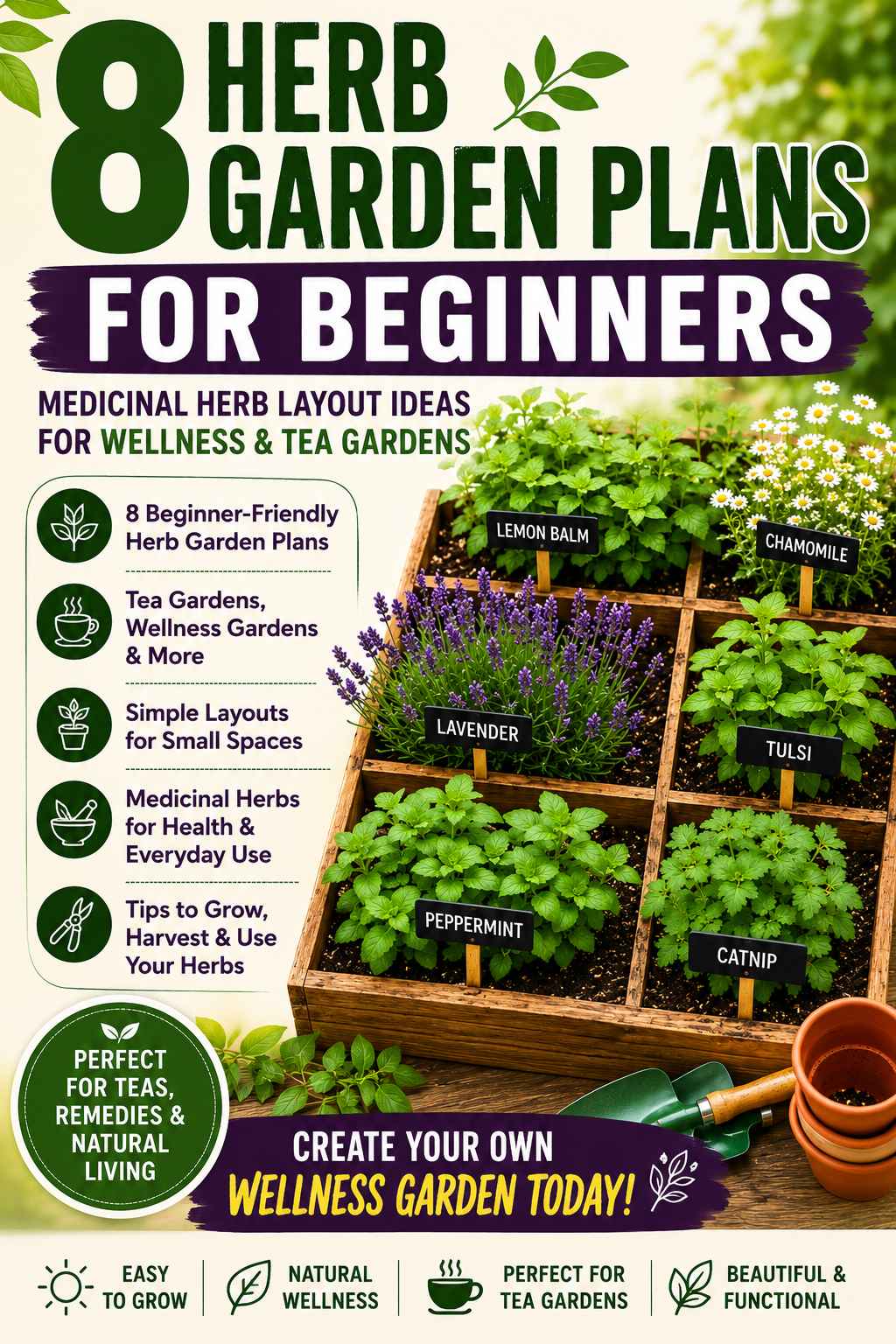
1. The Beginner Tea Herb Garden
If your goal is relaxing teas, calming evening routines, and simple daily wellness habits, this is one of the easiest herb garden layouts to start with.
Best Herbs for a Tea Garden
- Lemon balm
- Chamomile
- Tulsi (Holy Basil)
- Peppermint
- Lavender
- Catnip
Arrange taller herbs toward the back and low-growing herbs toward the front.
This type of garden works exceptionally well in:
- raised beds
- patio containers
- balcony gardens
- narrow side yards
Tea gardens also perform extremely well on Pinterest and visual search because they combine wellness aesthetics with practical functionality.
If you want practical ways to actually use your harvested herbs daily, this refreshing lemon balm & chamomile herbade recipe is a simple place to start for building calming herbal wellness routines at home.
2. The Medicinal Herb Starter Garden
This layout focuses on herbs traditionally used in home herbal routines and beginner herbalism education.
Ideal Beginner Medicinal Herbs
- Echinacea
- Motherwort
- Calendula
- Yarrow
- Lemon balm
- Tulsi
A simple grid layout works best here because it makes harvesting easier and helps beginners learn plant identification faster.
Many herbal gardening experts recommend starting with only 5–7 medicinal herbs during the first season instead of trying to grow everything at once.
Beginners who want a clearer roadmap for choosing medicinal herbs, understanding their traditional uses, and building confidence faster often benefit from this beginner-friendly free herbalism course and herbal wisdom guide before expanding their garden further.
That approach usually leads to much better long-term success.
3. The Small-Space Balcony Herb Garden
Not everyone has a backyard.
Fortunately, many medicinal herbs thrive in containers.
Best Container-Friendly Herbs
- Mint
- Thyme
- Basil
- Lemon balm
- Oregano
- Tulsi
Vertical shelving, railing planters, and stacked containers can dramatically increase growing space even in compact apartments.
This layout is especially attractive for urban wellness audiences looking for practical self-sufficiency without needing land.
4. The Kitchen + Wellness Combo Garden
This is one of the smartest layouts for beginners because it combines culinary herbs with wellness-supportive plants.
Suggested Combination
Culinary Section
- Basil
- Rosemary
- Thyme
- Parsley
Wellness Section
- Lemon balm
- Chamomile
- Tulsi
- Calendula
The result is a garden that supports:
- cooking
- herbal teas
- wellness routines
- natural skincare
- seasonal self-care
This type of dual-purpose garden typically delivers higher daily usage, which keeps beginner gardeners motivated.
5. The Raised Bed Herbal Garden Plan
Raised beds simplify:
- soil control
- drainage
- spacing
- weed management
For beginners, raised beds are often the fastest route to success.
Recommended Layout Strategy
- Tall herbs in the north section
- Medium growers in the center
- Spreading herbs near edges
Avoid planting aggressive spreaders like mint directly beside slower-growing medicinal herbs.
That single mistake ruins countless beginner gardens every year.
6. The Herbal Tea & Relaxation Garden
This layout is designed around calming evening routines and stress-supportive herbs.
Relaxation-Focused Herbs
- Lemon balm
- Lavender
- Chamomile
- Catnip
- Holy Basil
- Skullcap
Many gardeners now design wellness-focused outdoor spaces intentionally around mental reset and slower living.
That trend is becoming increasingly popular across both Google and AI-powered search platforms because users are searching for practical wellness systems, not just random gardening advice.
7. The Four-Season Herbal Garden
Most beginners assume herbal gardening only works during spring and summer.
That is outdated thinking.
With smart planning, many herbs can thrive across multiple seasons.
Cold-Tolerant Herbs
- Chives
- Sage
- Thyme
- Mint
- Oregano
Warm-Season Herbs
- Basil
- Tulsi
- Lemon balm
Using staggered planting schedules helps maintain harvests much longer throughout the year.
This strategy is especially useful for people investing in long-term herbal wellness habits.
8. The Deluxe Wellness Herb Garden
This is the most ambitious layout on the list.
Instead of organizing herbs randomly, this garden groups plants by wellness purpose.
Example Sections
Digestive Herbs
- Peppermint
- Fennel
- Chamomile
Immune Support Herbs
- Echinacea
- Elderflower
- Tulsi
Relaxation Herbs
- Lemon balm
- Lavender
- Catnip
Skin Support Herbs
- Calendula
- Plantain
- Aloe
This style of herbal garden creates a far more educational and intentional gardening experience.
It also pairs exceptionally well with structured herbal gardening courses and guided herbalism education.
The Smartest Shortcut for Beginners
Many people spend months trying to piece together herbal gardening information from random videos and social posts.
That usually creates confusion.
A structured herbal gardening course can dramatically shorten the learning curve by helping beginners understand:
- herb spacing
- seed starting
- medicinal herb selection
- harvesting methods
- garden design
- drying and storage
- seasonal planning
For readers who want step-by-step guidance on medicinal herbs, seed starting, harvesting, and practical garden planning, this complete herbal gardening course for beginners breaks the process down into a much more manageable and beginner-friendly system.
Some programs now even include:
- illustrated herb garden plans
- wellness-themed layouts
- organic seed collections
- medicinal herb growing guides
That combination is far more practical for beginners than trying to learn everything separately.
Limited-Time Bonus for Beginner Herbal Gardeners
One of the biggest challenges beginners face is knowing how to organize their herbs in a way that actually works long term. That is why structured garden layouts can save an enormous amount of time, confusion, and wasted planting space.Right now, gardeners enrolling in the Herbal Gardening Course can also receive a complete collection of illustrated herb garden plans designed around wellness goals, tea gardens, medicinal herbs, kitchen herbs, and beginner-friendly layouts.The current promotion also includes:
- $20 off the course
- wellness-focused herb garden layouts
- beginner medicinal herb guidance
- practical garden planning support
If you want a simpler way to plan your medicinal herb garden without relying on random trial and error, this beginner-friendly Herbal Gardening Course with illustrated garden plans is worth exploring while the seasonal bonus is still available.
Because the bonus garden plans are only available for a limited time, this offer is especially useful for beginners who want a clearer roadmap before planting season moves into full swing.
Why Medicinal Herb Gardening Is Growing So Fast
Interest in medicinal herbs is no longer limited to hardcore gardeners.
People are increasingly searching for:
- herbal teas
- natural wellness habits
- sustainable living
- low-tox lifestyles
- traditional plant knowledge
- self-reliance skills
Herb gardening sits directly at the center of all those trends.
Many modern gardeners are also exploring online herbal education and expert-led workshops to deepen their understanding of medicinal plants beyond basic gardening techniques.
And unlike many expensive wellness hobbies, herbal gardening often starts with only a few containers, basic soil, and simple beginner herbs.
That accessibility is one reason the space continues expanding rapidly across:
- Google search
- YouTube
- AI search engines
- wellness communities
Final Thoughts
The best herb garden is not the biggest one.
It is the one you actually use consistently.
Start simple.
Choose herbs that match your lifestyle.
Build around wellness goals you genuinely care about.
And focus on creating a garden that feels manageable instead of perfect.
A thoughtfully designed medicinal herb garden can become:
- a tea source
- a wellness routine
- a cooking companion
- a calming hobby
- a learning experience
- a long-term investment in healthier living
And for many beginners, it becomes the gateway into a much deeper understanding of herbal wellness and traditional plant knowledge.
Frequently Asked Questions
What are the easiest medicinal herbs for beginners to grow?
Lemon balm, mint, tulsi, chamomile, calendula, and thyme are among the easiest medicinal herbs for beginners because they adapt well to containers and require relatively simple maintenance.
Can I grow a medicinal herb garden in containers?
Yes. Many medicinal herbs grow exceptionally well in pots, balcony containers, vertical gardens, and raised beds. Container gardening is often easier for beginners because it provides better soil and moisture control.
What is the best herb garden layout for small spaces?
A vertical or container-based herb garden layout works best for small spaces. Grouping herbs by sunlight and watering needs also improves long-term success.
Which herbs are best for a tea garden?
Popular tea herbs include chamomile, lemon balm, peppermint, lavender, tulsi, and catnip. These herbs are commonly grown for calming herbal tea blends and wellness routines.
Are herbal gardening courses worth it for beginners?
For many beginners, yes. Structured herbal gardening courses can significantly reduce trial-and-error mistakes while helping gardeners learn medicinal herb care, harvesting techniques, garden planning, and herbal wellness applications faster.
How much sunlight do medicinal herbs need?
Most medicinal herbs prefer 6–8 hours of sunlight daily. However, herbs like mint and lemon balm can tolerate partial shade in warmer climates.
What is the best time to start an herb garden?
Spring is traditionally the best season for starting most herb gardens, although many herbs can also be grown year-round indoors depending on climate conditions.
Many beginner gardeners spend months jumping between random videos, conflicting advice, and trial-and-error planting. A structured herbal gardening system can shorten that learning curve dramatically. If you want illustrated garden layouts, medicinal herb guidance, wellness-focused planting strategies, and step-by-step support, explore this complete Herbal Gardening Course designed specifically for beginners building a practical medicinal herb garden at home. You can also explore the latest Herbal Seed Starting Webinar if you want practical guidance on growing stronger medicinal herbs from seed successfully.
#HerbGardenPlans #MedicinalHerbs #HerbalGardening #WellnessGarden #TeaGarden #GrowYourOwnHerbs #HerbalTeaGarden #NaturalWellness #BeginnerGardening #HerbalLifestyle #HealingHerbs #OrganicGardening #Herbalism #GardenDesign #HomeHerbalist #MedicinalGarden #HolisticLiving #PlantBasedWellness #SustainableLiving #HerbalEducation
Disclosure:
This article may contain affiliate links. If you choose a service through our links, we may earn a commission at no extra cost to you.
This article was created with AI-assisted research and carefully reviewed by our in-house team before publication