Herbalism Collective Bundle Review (2026): Is It the Best Online Herbalism Course Bundle for Learning Plant-Based Wellness?
Herbalism Collective Bundle Review (2026): Is It the Best Online Herbalism Course Bundle for Learning Plant-Based Wellness?
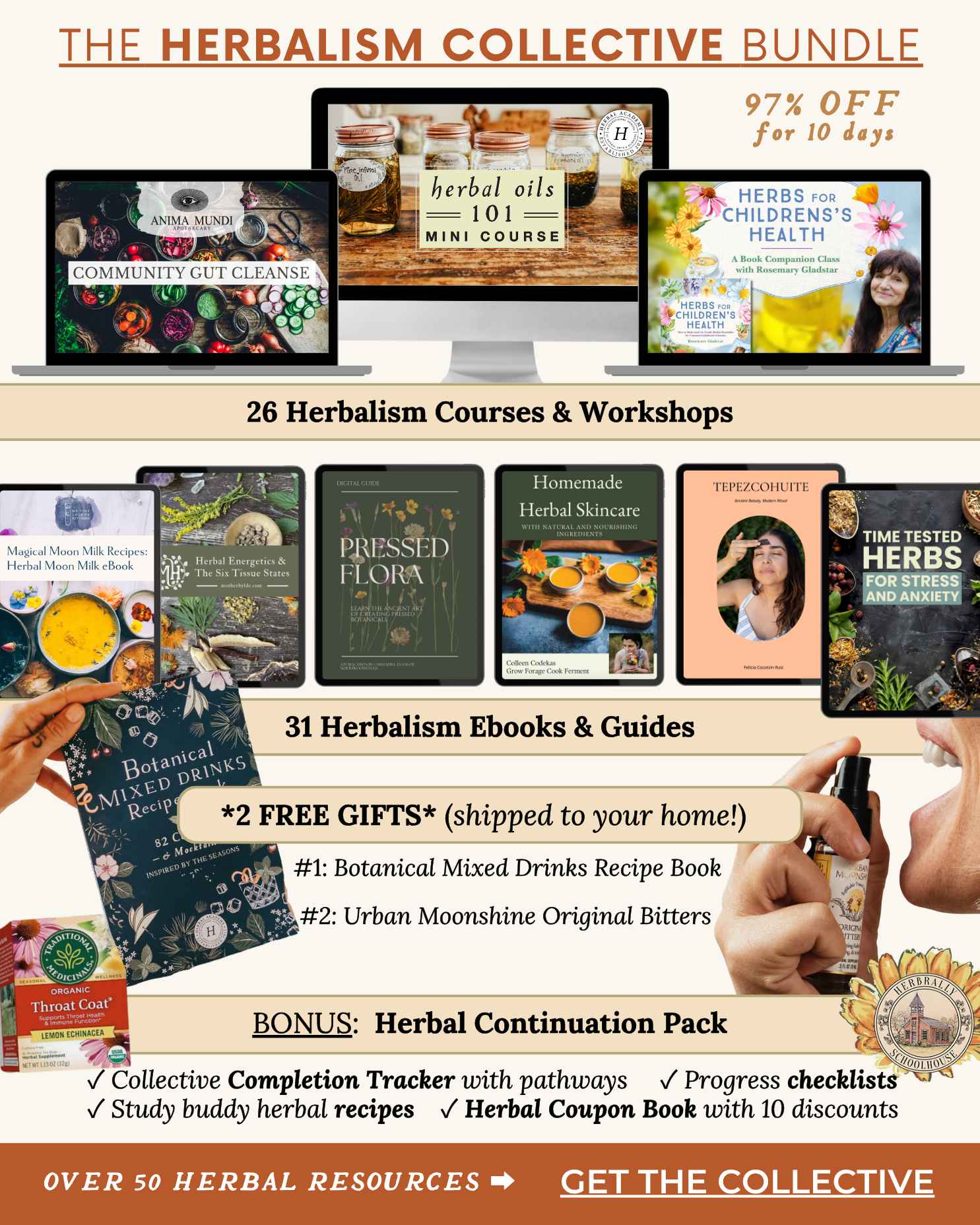
If you're looking for the best online herbalism courses in 2026, the Herbalism Collective Bundle brings together dozens of expert-led classes, workshops, ebooks, and educational resources into a single learning package. Rather than purchasing individual courses separately, learners gain access to a wide variety of herbal education covering home herbalism, herbal remedies, tea blending, women's wellness, gardening, and plant-based traditions, making it an attractive option for beginners and experienced herbal enthusiasts alike.
Want to know whether now is the best time to buy? See our latest guide explaining the current pricing and what changes after the promotional period.
Still wondering where to begin? Instead of investing in a single course straight away, explore a curated collection of expert-led herbal classes, workshops, and learning resources to see which teaching style and topics resonate with you. You can explore everything currently included in the Herbalism Collective Bundle here.
Not sure whether a bundle or a structured course is the better fit? We also compared several online herbalism learning paths to help you understand which option works best for beginners, hobbyists, and future professional herbalists before making a decision.
Introduction
Learning herbalism today is both easier and more overwhelming than it has ever been.
Not because quality education is difficult to find—but because there is now an abundance of it.
A quick online search reveals thousands of herbal courses, digital workshops, certification programs, ebooks, YouTube channels, podcasts, and independent educators. Every teacher offers a unique philosophy, every school promises a different learning experience, and every course seems to specialize in one particular aspect of herbal practice.
For someone beginning their herbal journey, deciding where to invest time and money can quickly become the biggest obstacle.
Do you start with herbal remedies?
Would learning about medicinal plants be more practical?
Should you focus on creating a home apothecary first?
Or perhaps tea blending, women's wellness, herbal gardening, or plant energetics better matches your interests?
These aren't simple questions because herbalism itself isn't a single discipline. It's a broad and evolving field shaped by centuries of traditional knowledge, regional practices, scientific research, and personal experience.
Buying individual courses one by one often becomes an expensive experiment. A single premium workshop can cost as much as several books combined, while comprehensive training programs may require a significant financial commitment before you're even certain the teaching style aligns with your learning preferences.
This is exactly why curated educational collections have started attracting attention within the herbal community.
Rather than asking learners to commit to one instructor or one methodology immediately, they offer the opportunity to explore multiple educators, diverse teaching approaches, and a wide range of practical topics before deciding where to go deeper.
The Herbalism Collective Bundle follows this philosophy.
Instead of positioning itself as another standalone online course, it brings together contributions from respected herbal educators, established schools, experienced practitioners, and well-known authors into a single educational collection.
That difference is worth paying attention to.
Throughout this review, we'll take an objective look at what the bundle includes, who will benefit most from it, where its limitations lie, and whether it represents genuine educational value rather than simply another attractive online promotion.
If you're searching for one of the best online herbalism course bundles available today, this guide aims to help you make an informed decision based on practical learning outcomes—not marketing promises.
Why Herbalism Education Is More Relevant Than Ever
Interest in herbal education has steadily expanded over the past decade, driven by a broader movement toward self-sufficiency, sustainable living, and a deeper understanding of traditional wellness practices.
Many people first encounter herbalism through simple, everyday experiences—growing herbs on a balcony, experimenting with herbal teas, exploring natural skincare recipes, or learning about plants commonly used in family traditions.
What begins as curiosity often develops into a desire for structured learning.
At the same time, modern education has changed dramatically.
Online learning has made expert instruction more accessible than ever. Instead of traveling to workshops or enrolling in location-based programs, learners can now study from home, revisit lessons at their own pace, and explore specialized topics that were once difficult to access.
This flexibility is particularly valuable for busy professionals, parents, students, and anyone balancing education alongside work or family commitments.
Another reason herbal education continues to grow is its diversity.
Unlike many academic disciplines that follow a standardized curriculum, herbalism encompasses multiple traditions and perspectives. One educator may emphasize traditional Western herbalism, while another focuses on ancestral plant wisdom, herbal energetics, Ayurvedic influences, or practical home remedies.
This diversity enriches the learning experience, but it also introduces a challenge: choosing where to begin.
Committing to a single course without understanding different teaching styles can feel limiting.
That's why many experienced learners encourage newcomers to explore a variety of voices before investing deeply in one educational path.
Beyond personal wellness, herbal education also supports practical skills that extend into everyday life.
Learners often develop confidence in:
- Building and organizing a home apothecary.
- Understanding common herbs and their traditional uses.
- Preparing herbal teas, tinctures, infused oils, and salves.
- Growing medicinal plants in home gardens.
- Exploring seasonal wellness practices.
- Deepening their relationship with nature and local plant ecosystems.
For creators, wellness educators, gardeners, and small business owners, herbal knowledge can also complement existing work by expanding educational content, workshops, or product development.
That said, it's important to approach herbal learning with realistic expectations.
No bundle or online course can replace years of hands-on experience, mentorship, or formal clinical training. Responsible herbal education should inspire continued learning rather than suggest that a few workshops alone create expertise.
Viewed through that lens, curated educational collections can serve as valuable gateways—introducing learners to respected educators and helping them discover the teaching styles and subject areas that resonate most with their goals.
If you're still exploring herbalism before investing in premium education, our guide to free herbalism courses and online workshops highlights several beginner-friendly opportunities that can help you build confidence before choosing a structured learning path.
What Is the Herbalism Collective Bundle?
The Herbalism Collective Bundle is best understood as a curated educational library rather than a single online course.
Instead of being created by one instructor or one organization, it brings together a broad collection of digital learning resources contributed by numerous herbal educators, schools, authors, and practitioners.
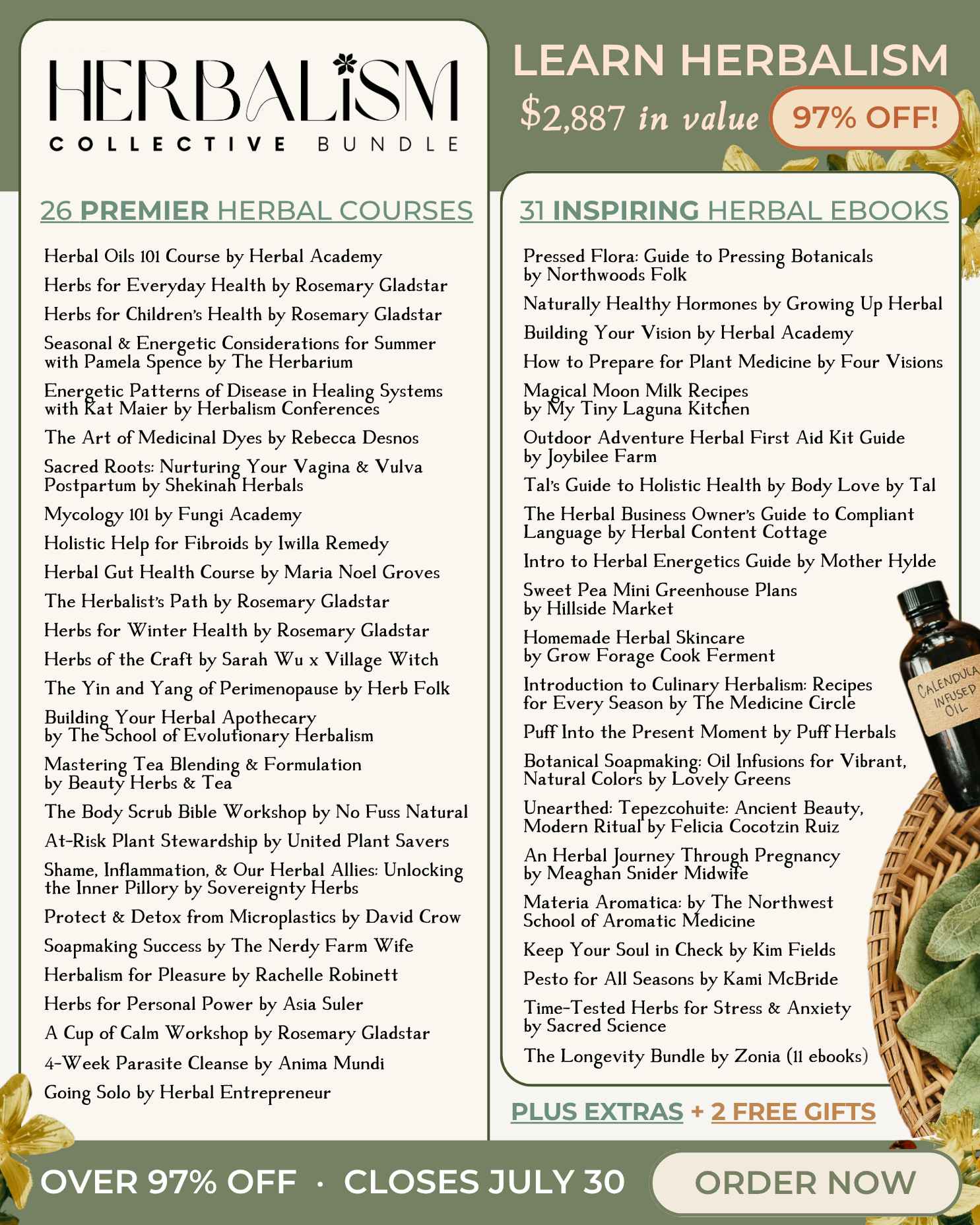
Depending on the current edition, the collection may include video courses, workshops, ebooks, downloadable guides, educational toolkits, and other learning materials covering a wide spectrum of herbal topics. Because the contents can evolve over time, it's always worth reviewing the official bundle page to confirm the latest inclusions before purchasing.
One of the bundle's defining strengths is its diversity.
Rather than presenting herbalism through a single philosophy, it introduces learners to multiple perspectives, specialties, and teaching methods. This allows readers to compare approaches, discover new mentors, and explore areas they may not have initially considered.
Topics commonly represented include:
- Home herbalism and everyday wellness practices.
- Herbal preparations such as teas, tinctures, oils, and salves.
- Plant identification and herbal energetics.
- Women's wellness and reproductive health.
- Kitchen herbalism and culinary herbs.
- Gardening and cultivating medicinal plants.
- Seasonal living and traditional plant wisdom.
- Emotional wellbeing and nervous system support.
- Natural skincare and herbal crafting.
- Business and educational guidance for aspiring herbal practitioners.
Another notable aspect is the breadth of contributors. The collection has featured respected names and established educational organizations within the herbal community, giving learners exposure to a variety of teaching styles rather than a single curriculum.
From an educational standpoint, this model offers an important advantage.
Purchasing individual courses often requires making decisions with limited information. A learner may invest heavily in one instructor only to discover that another educator's teaching style or area of specialization is a better fit.
A curated bundle lowers that barrier by allowing exploration across multiple voices before committing to more advanced programs.
Of course, this approach also has limitations.
Because the bundle combines independent educational resources, the learning experience is not structured as a step-by-step certification pathway. Those seeking a formal, sequential curriculum leading toward professional practice may eventually need to supplement the bundle with more comprehensive training from an established herbal school.
For curious learners, hobbyists, wellness enthusiasts, and those exploring herbalism for the first time, however, the collection can provide an accessible and engaging introduction to the remarkable diversity of modern herbal education.
What's Included in the Herbalism Collective Bundle?
One of the biggest questions prospective buyers ask isn't simply "How much does it cost?"—it's "What am I actually getting?
"That's an important distinction because educational bundles can vary dramatically in quality. Some are little more than collections of introductory PDFs or short video lessons, while others provide access to comprehensive courses created by established educators.
The Herbalism Collective Bundle positions itself closer to the latter.
Rather than centering around a single instructor, it brings together contributions from numerous herbal educators, schools, authors, and wellness practitioners into one digital collection. Instead of committing to one teaching philosophy from the outset, learners can explore different voices, specialties, and educational styles at their own pace.
While the exact resources may evolve with each edition of the bundle, the collection typically spans a wide range of subjects that reflect the diversity of modern herbal education.
Home Herbalism and Everyday Remedies
Many people begin their herbal journey with practical applications they can incorporate into everyday life.
Resources in this category often explore how to prepare common herbal remedies, understand frequently used medicinal plants, organize a home apothecary, and build confidence in using herbs responsibly for day-to-day wellness practices.
For beginners, this foundational knowledge can feel far less intimidating than immediately diving into advanced botanical theory or clinical herbalism.
Herbal Preparations and Traditional Skills
Knowing which herb to use is only part of herbal education.
Equally important is understanding how herbs are prepared and why different preparation methods matter.
Depending on the included resources, learners may encounter lessons covering:
- Herbal teas
- Infusions
- Decoctions
- Tinctures
- Herbal oils
- Salves
- Syrups
- Oxymels
- Herbal vinegars
- Topical preparations
These practical skills often form the backbone of home herbalism because they translate directly into everyday practice.
Women's Wellness
Women's health continues to be one of the most requested areas within herbal education.
Rather than presenting generalized advice, experienced educators frequently explore traditional herbal approaches related to different life stages, seasonal wellbeing, and holistic self-care practices.
For readers specifically interested in reproductive wellness or herbal support throughout different phases of life, this section alone may justify exploring the bundle.
Kitchen Herbalism and Tea Blending
Not every learner intends to become a practicing herbalist.
Some simply want to understand the plants already sitting in their kitchens.
Kitchen herbalism focuses on practical, approachable learning—using culinary herbs, creating herbal teas, experimenting with spice blends, and incorporating botanical ingredients into daily routines.
This area tends to appeal to beginners because it requires little specialized equipment while offering immediate opportunities for experimentation.
Gardening and Medicinal Plants
Growing herbs creates an entirely different relationship with herbal education.
Instead of purchasing dried botanicals, learners begin understanding seasonal growth cycles, harvesting practices, plant care, and sustainable cultivation methods.
For home gardeners, this often becomes one of the most rewarding aspects of herbal learning because knowledge develops alongside the plants themselves.
Herbal Energetics and Traditional Perspectives
Not all herbal education focuses solely on plant chemistry.
Many respected teachers also discuss traditional herbal philosophies, energetic qualities of plants, historical practices, and cultural traditions that have shaped herbalism across generations.
Even if readers ultimately prefer evidence-informed herbal education, understanding these perspectives provides valuable historical context.
Emotional Wellbeing and Nervous System Support
Stress, sleep quality, and emotional resilience have become increasingly common reasons people explore herbal education.
Some resources examine herbs traditionally associated with calming routines, restorative practices, and nervous system support while emphasizing responsible learning and appropriate expectations.
These topics resonate strongly with modern learners seeking a more intentional relationship with wellness.
Herbal Crafting and Natural Living
Beyond medicine, herbalism also intersects with creative practice.
Depending on the edition, learners may discover projects related to:
- Botanical skincare
- Herbal soaps
- Infused body oils
- Herbal bath products
- Natural household items
- Seasonal botanical crafts
These resources often appeal to hobbyists, creators, and small businesses interested in botanical product development.
Business and Professional Development
One aspect that differentiates this bundle from many introductory herbal courses is the occasional inclusion of business-oriented resources.
While the collection is not designed as a complete entrepreneurship program, some contributors explore topics such as:
- Building an herbal business
- Teaching workshops
- Developing educational content
- Branding
- Ethical practice
- Client communication
For aspiring educators or product creators, these resources add an additional layer of practical value beyond herbal knowledge itself.
Meet the Herbal Experts and Schools
One of the strongest reasons this bundle attracts attention each year is the caliber of educators involved.
Instead of relying on a single instructor, the collection has featured contributions from respected herbal schools, experienced practitioners, bestselling authors, and long-established educators whose work spans multiple traditions and areas of expertise.
At the time of writing, contributors have included well-known names such as Herbal Academy, Rosemary Gladstar, The School of Evolutionary Herbalism, Sacred Science, Kat Maier, Maria Noël Groves, Kami McBride, Felicia Cocotzin Ruiz, David Crow, Asia Suler, Rachelle Robinett, Anima Mundi, Selima Harleston Lust, Abril Donea, Tara Lanich-LaBrie, and The Northwest School of Aromatic Medicine, among others.
That diversity is significant.
Each educator brings a distinct perspective shaped by years of study, teaching, and practical experience.
Some specialize in clinical herbalism.
Others focus on ancestral plant traditions.
Some emphasize gardening and sustainable cultivation.
Others explore herbal energetics, formulation techniques, culinary herbs, or botanical wellness.
Rather than encouraging readers to adopt a single philosophy, the bundle exposes them to a broad educational landscape.
From an operator's perspective, this is one of the collection's greatest strengths.
Choosing an educational program without experiencing an instructor's teaching style can be a gamble. By learning from multiple respected educators, readers gain a clearer understanding of whose approach resonates with their interests before investing in more advanced training.
It transforms the bundle from a collection of courses into an opportunity to explore the wider herbal community.
Who Is This Bundle Best For?
Every educational product serves a different audience.
The Herbalism Collective Bundle is no exception.
Beginners
If you're completely new to herbalism, the bundle offers an accessible way to explore different areas without committing to one specialized course immediately.
Instead of asking "Which instructor should I choose?", you can experience multiple teaching styles and gradually discover the topics that interest you most.
Curious Lifelong Learners
Some people simply enjoy learning.
They aren't pursuing professional certification.
They're expanding their understanding of plants, wellness traditions, and sustainable living.
For these readers, the variety of topics makes the bundle particularly appealing.
Home Herbalists
If your goal is creating herbal teas, organizing a home apothecary, preparing infused oils, or growing medicinal herbs, you'll likely find numerous resources aligned with those interests.
Wellness Professionals
Health coaches, yoga instructors, holistic wellness practitioners, nutrition educators, and wellness content creators may also benefit from broadening their botanical knowledge.
Although the bundle isn't intended to replace formal clinical education, it can provide valuable supplementary learning across multiple disciplines.
Content Creators
Bloggers, YouTubers, educators, and social media creators focused on natural wellness often need reliable educational resources before producing informative content.
Exposure to multiple instructors and teaching approaches can strengthen both confidence and subject knowledge.
Gardeners
Many gardeners become interested in medicinal plants after growing culinary herbs.
Learning how herbs are traditionally harvested, preserved, and prepared creates a natural extension of that hobby.
Who Might Want Something Else?
Despite its strengths, this bundle won't suit everyone.
If your goal is becoming a practicing clinical herbalist through a structured certification pathway, you'll eventually require more comprehensive education from an established herbal school.
Likewise, learners who prefer rigid, step-by-step curricula may find the collection's variety slightly overwhelming at first.
The bundle works best as an educational library rather than a sequential textbook.
How It Compares to Buying Individual Courses
This is where the bundle becomes particularly interesting from a value perspective.
Imagine you're exploring herbal education independently.
You discover one excellent course on herbal remedies.
Another on tea formulation.
A third covering medicinal gardening.
Then an ebook on herbal energetics.
A workshop on women's wellness catches your attention.
Soon, you've assembled a wish list that spans multiple educators and topics.
There's nothing wrong with that approach.
In fact, many experienced herbalists build their education over several years by purchasing individual programs from instructors they admire.
The challenge is cost—and uncertainty.
Each purchase represents a commitment before you've had the opportunity to compare teaching styles, instructional depth, or how well a particular educator's philosophy aligns with your own learning preferences.
A curated bundle changes that equation.
Instead of placing all your investment into one course, it offers a broader educational experience at a substantially lower entry cost than purchasing each resource individually.
From a practical standpoint, this creates three distinct advantages:
First, it reduces financial risk.
Rather than spending hundreds of dollars on one course you may or may not enjoy, you gain exposure to numerous educators across different specialties.
Second, it encourages exploration.
Many learners discover unexpected interests after encountering topics they hadn't originally planned to study.
Someone who begins with herbal teas may become fascinated by medicinal gardening, aromatic medicine, or botanical skincare simply because those resources are readily available.
Third, it helps identify future mentors.
After sampling different teaching styles, readers can make far more informed decisions about investing in advanced certifications or long-term educational programs.
That said, buying individual courses still has its place.
If you've already identified a specific instructor whose curriculum perfectly matches your goals, a dedicated program may offer greater depth and a more structured progression.
The Herbalism Collective Bundle isn't intended to replace those flagship courses.
Instead, it functions as an educational gateway—a practical way to explore the breadth of herbalism before committing to a more specialized learning path.
For many learners, that balance of affordability, variety, and educational discovery is precisely what makes the bundle stand out. It offers not just a collection of resources, but a broader view of the herbal world and the many ways people choose to engage with it.
If, after exploring different teaching styles, you decide you prefer a structured curriculum with progressive learning, our in-depth review of the Herbal Academy Clinical Herbalist Path explains how it compares with a curated bundle approach.
Workflow & Learning Experience
One of the most overlooked aspects of online education isn't the quality of the lessons—it's whether learners actually complete them.
Many digital courses begin with enthusiasm but gradually become another forgotten purchase because they're either too rigid, too lengthy, or too narrowly focused. The Herbalism Collective Bundle takes a different approach by offering variety rather than a fixed curriculum.
That flexibility can be both a strength and a challenge.
Unlike a structured certification program that tells you exactly what to study next, this bundle functions more like a digital herbal library. You're free to move between topics based on your interests, available time, and learning goals.
For self-directed learners, that's a significant advantage.
You might spend one evening exploring herbal tea blending, another learning about medicinal herbs for the home garden, and later dive into herbal energetics or botanical skincare. This freedom allows the learning experience to evolve naturally instead of following a predetermined sequence.
The downside is that beginners may initially feel overwhelmed by the sheer number of resources available.
Without a personal learning plan, it's easy to jump between subjects without developing depth in any one area.
A practical approach is to choose a single theme first—such as home herbalism or herbal preparations—complete those resources, and then gradually branch into related topics. This creates a more cohesive learning journey while still taking advantage of the bundle's diversity.
Another practical consideration is accessibility.
Because the bundle primarily consists of digital resources, learners can generally access materials from a desktop, laptop, or tablet whenever it suits their schedule. This makes it particularly appealing for busy professionals, parents, and lifelong learners who prefer studying in shorter sessions rather than committing to full-day workshops.
For Linux users, this is also encouraging. Since most resources are web-based or downloadable, they typically work well across major operating systems without requiring proprietary software. Users of distributions such as Ubuntu, Fedora, Linux Mint, or other desktop Linux environments are unlikely to encounter platform-specific barriers, provided they have a modern web browser and standard document or media applications.
From an operational perspective, the bundle is best viewed as an educational resource library rather than a traditional online course. Learners who enjoy exploring, comparing teaching styles, and building knowledge gradually are likely to appreciate this format. Those who require structured assignments, instructor feedback, and certification milestones may eventually prefer a dedicated herbal education program.
Pros and Cons
Pros
Learn from multiple respected educators
One of the bundle's strongest advantages is exposure to a wide range of teaching philosophies, specialties, and instructional styles. Instead of committing to a single educator, you can discover whose approach best matches your learning preferences.
Broad topic coverage
The collection spans home herbalism, herbal remedies, tea blending, women's wellness, gardening, herbal crafting, plant energetics, emotional wellbeing, and more. This variety makes it suitable for learners with diverse interests.
Excellent value compared to individual purchases
If the current bundle contents align with your interests, purchasing the collection can cost substantially less than buying similar resources individually. That makes it an attractive entry point for exploring herbal education.
Self-paced learning
There are no rigid schedules or classroom deadlines. Learners can study according to their own routines and revisit resources when needed.
Discover new teachers
Many learners purchase individual courses from educators they already know. The bundle offers an opportunity to discover authors, schools, and practitioners you may never have encountered otherwise.
Cons
No structured curriculum
The bundle isn't designed as a step-by-step herbal certification program. Beginners looking for a clearly defined learning path may need to create their own study plan.
Depth varies between resources
Because multiple independent educators contribute to the collection, some resources are naturally more comprehensive than others. Treat the bundle as a curated library rather than a single cohesive course.
Not a replacement for professional clinical training
Anyone planning to become a practicing clinical herbalist should view the bundle as a foundation or supplement rather than a substitute for accredited, in-depth education.
Time commitment
Ironically, having access to many resources can make prioritization difficult. Learners who try to consume everything at once may experience information overload.
Honest Criticism
Affiliate reviews often focus exclusively on positives.That approach rarely serves readers well.
The Herbalism Collective Bundle offers impressive variety, but variety alone doesn't guarantee the perfect learning experience for everyone.
If you thrive on structured progression, weekly assignments, assessments, and instructor accountability, this bundle may feel less organized than a traditional online course. It rewards curiosity more than linear progression.
Likewise, not every resource will be equally relevant to every learner.
Someone primarily interested in medicinal gardening may spend little time with content focused on botanical skincare, while a tea enthusiast might not immediately explore herbal business topics.
This isn't necessarily a flaw—it simply reflects the bundle's breadth.
Another consideration is longevity.
Educational bundles are promotional events, meaning future editions may differ in contributors, included resources, or pricing. Readers should always review the official sales page before purchasing to confirm the latest details.
Finally, it's worth remembering that no online course can replace practical experience.
Reading about herbs, watching demonstrations, and downloading ebooks provide valuable knowledge, but real confidence develops through responsible practice, observation, and continued learning over time.
Viewed with realistic expectations, the bundle becomes considerably more valuable.
Frequently Asked Questions
Is the Herbalism Collective Bundle worth it?
If you're looking to explore herbalism across multiple topics and educators without purchasing numerous individual courses, the bundle can represent excellent value. Whether it's worthwhile ultimately depends on your learning goals and interest in the included resources.
Is this bundle suitable for complete beginners?
Yes. Many resources are designed with beginners in mind, although the large number of available materials means it's helpful to focus on one topic at a time rather than trying to study everything simultaneously.
Does the bundle replace herbal certification?
No.
It provides educational resources from respected contributors but should not be viewed as a substitute for comprehensive clinical herbalist training or formal certification programs.
Can experienced herbal learners benefit?
Absolutely.
Experienced learners often appreciate the opportunity to explore new educators, deepen existing knowledge, and discover specialized topics they may not have previously studied.
How does it compare with buying individual courses?
Purchasing individual courses usually provides greater depth within one subject. The bundle offers greater breadth, allowing learners to sample multiple educators and disciplines before investing in advanced training.
Is it available year-round?
The Herbalism Collective Bundle is typically offered as a limited-time promotion. Availability, pricing, and included resources may change from one edition to the next, so checking the official offer page is always recommended.
If you're ready to build your herbal knowledge without purchasing multiple individual courses, take a few minutes to review everything included in the current Herbalism Collective Bundle. Browse the featured educators, compare the resources, and decide whether it's the right fit for your learning journey before the collection closes.
Final Verdict
The Herbalism Collective Bundle succeeds because it recognizes a simple truth about learning: most people don't know exactly where their interests will lead until they begin exploring.
Rather than asking learners to commit hundreds of dollars to one instructor or one teaching philosophy, it opens the door to a broad community of respected herbal educators covering diverse traditions, practical skills, and areas of specialization.
Its greatest strength isn't simply the potential cost savings.
It's the opportunity to discover new teachers, compare different perspectives, and build a personalized herbal learning journey based on genuine curiosity rather than guesswork.
That said, it's important to understand what this bundle is—and what it isn't.
If you already know you want a dedicated learning path rather than a curated collection, our comparison of the best online herbalism courses for beginners and intermediate learners can help you choose the right program for your goals.
If you're seeking a formal, step-by-step clinical herbalism curriculum with assessments and certification, a dedicated herbal school remains the better long-term investment.
However, if you're a curious beginner, a home herbalist, a gardener, a wellness enthusiast, or someone eager to broaden your understanding of medicinal plants through multiple trusted voices, this collection offers a compelling way to begin or expand that journey.
From Kuruntha Smarket's perspective, the Herbalism Collective Bundle earns a strong recommendation for readers who value educational variety, self-paced learning, and the freedom to explore herbalism from multiple viewpoints before committing to advanced study.
As always, before purchasing, review the current bundle contents, participating educators, pricing, and terms to ensure they align with your personal learning objectives.
Conclusion
If you've been postponing your herbal education because choosing the right course felt overwhelming, this collection offers a practical alternative.
Instead of investing in just one program and hoping it's the right fit, you can explore a diverse library of herbal courses, workshops, ebooks, and educational resources from respected educators—all gathered into a single collection.
Whether your interest lies in home herbalism, medicinal plants, herbal remedies, tea blending, gardening, women's wellness, or simply reconnecting with traditional plant knowledge, there's likely something here that will enrich your learning journey.
If the current edition includes topics and instructors that match your goals, it's worth taking a closer look while the bundle is available. Compare the included resources, consider how they fit your interests, and decide whether this learning library offers the value you're looking for.
A thoughtful investment in education often pays dividends far beyond the initial purchase—and herbal knowledge is one of those skills that can continue to grow with you for years to come.
#Herbalism #HerbalEducation #LearnHerbalism #HerbalMedicine #MedicinalPlants #NaturalWellness #HomeHerbalist #HolisticLiving #PlantBasedWellness #HerbalRemedies #HerbalCommunity #WellnessEducation #HerbalCourses #LifelongLearning #KurunthaSmarket
Disclosure:
This article may contain affiliate links. If you choose a service through our links, we may earn a commission at no extra cost to you.
This article was created with AI-assisted research and carefully reviewed by our in-house team before publication